Galapatours logo 1200px svg

Bestseller

All Dates & Prices

Cruises

Galapagos

Info

Home

Bestseller

Galapatours

Santiago, Isabela & Fernandina

Galapatours

South & Central Islands Galapagos Cruise

Galapatours

Santiago, Isabela & Fernandina

Galapatours

Southern, Central, North & Western

Galapatours

Western Galápagos Cruise

Galapatours

Center & Southeast Galápagos

All Dates & Prices

Cruises

Information

Diving Cruises

For Deal Hunters

For Families

For Solo Travelers

Gay & LGBT Cruises

Last Minute Offers

Our Selection Of The Best Routes

Search by Date & Price

Ship Type

All ships & How to pick the best

Larger Ships (>50 Passengers)

Motor Catamarans

Sailing Catamarans

Sailing Yachts

Yachts

Travel Style

Budget Cruises

Classic Cruises

Premium Cruises

Luxury Cruises

Galapagos

Islands: Center

Baltra

Bartholmew

Genovesa

Marchena

North Seymour

Pinzón

Rábida

Santa Cruz

Santa Fe

Santiago

South Plaza

Islands: East

Española

Floreana

San Cristóbal

Islands: West

Darwin (For Divers Only)

Fernandina

Isabela

Wolf (For Divers Only)

Info

Information

All Islands and Highlights

What our travelers say

Our Team & Our Passion

Add-Ons

Answers to over 80 FAQ

Flights

Free Guidebook Download

Galapagos Wildlife Guide

Sustainable Tourism

Weather in the Galapagos

YouTube: Galapagos Expert Talks

Your Advantages When Booking With Us

Why book with us?

Flexible Booking Conditions

No Hidden Fees

Travel Insurance for EU and CH Residents

Unbiased Recommendations

Your money is protected

Contact us

Weekdays from 9:00 to 14:00 EST

$
​
​
$
​
​

Sign up for our Galapagos newsletter

Get travel inspiration and exclusive deals delivered straight to your inbox.

​
Galapatours logo 1200px svg

Budget Ships

Aida Maria

Angelito

Aqua

Danubio Azul

Golondrina

Nemo I

Classic Ships

Aggressor III

Anali

Archipel I

Beagle

Bonita

Eden

Estrella del Mar

Premium Ships

Anahi

Angel

Beluga

Cachalote Explorer

Calipso

Coral I + II

Eco Galaxy

Luxury Ships

Alia

Aqua Mare

Cormorant II

Elite

Endeavour II

Endemic

Evolution

Further Cruise Links

The Best Galapagos Cruises

Galápagos Honeymoon Cruises

Galápagos Cruises with French Speaking Guides

Galápagos Cruises with German Speaking Guides

4 Day Galápagos Cruises

5 Day Galápagos Cruises

7 Day Galápagos Cruises

Further Information

About Galapatours

B2B Deals

Careers

Join our team!

Terms & Conditions

ventura TRAVEL

Reservations

🇺🇸 +1 347 674 0913

🇬🇧 +44 20 4525 9654

🇩🇪 +49 30 30809199

🇫🇷 +33 1 86 26 29 65

Contact Form

service(at)galapatours.com

Weekdays from 9:00 to 14:00 EST

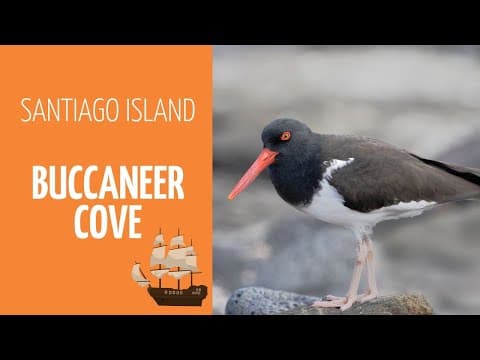
Buccaneer Cove

Buccaneer Cove

Historical pirate anchorage and seabird haven

Information about Buccaneer Cove

Biodiversity

Panorama

Beaches

Snorkeling

Accesibility

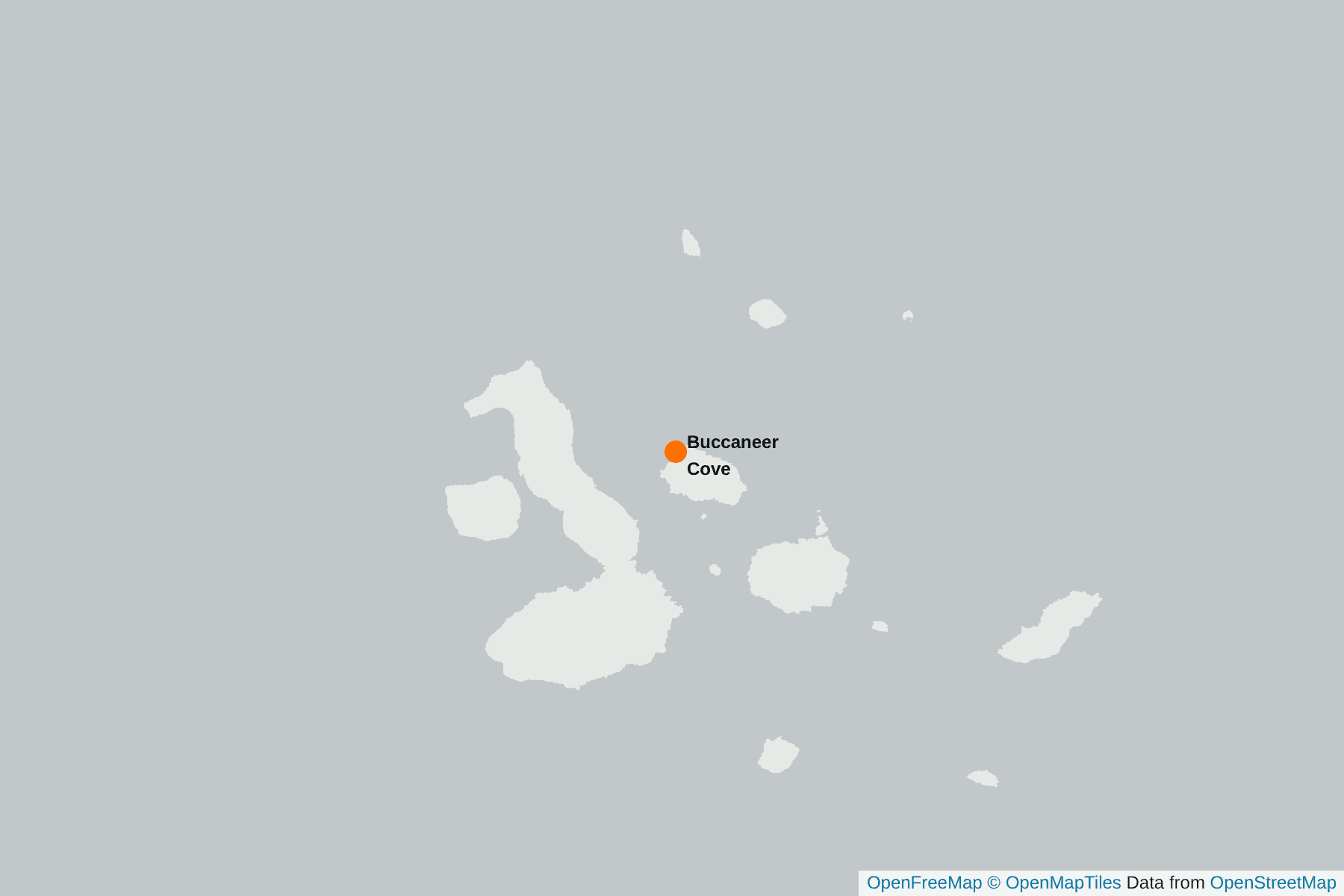
Sited on the northwest coast of Santiago Island, Buccaneer Cove wasn't named as a romantic fancy, but because it actually was used extensively by pirates, privateers, buccaneers and whalers to set anchor and head ashore.

Of all the Galápagos Islands, Santiago was most frequently used as a stop over as it provided easy access to fresh water, wood, and meat. Used since the 1600s as a staging point, the easy-to-catch Giant Tortoises that lived here became a useful source of protein for the sailors. There was a more strenuous journey required up to the highlands in search of water, but the sheltered cove made this a better location than some of the more open coast elsewhere.

Today the steep cliffs above the cove are filled with nesting seabirds, wheeling in the air above the deep red sands of the beach. This is a good site for snorkeling or to stroll along the beach drinking in the sights and sounds of the Galápagos, and you will often find yourself sharing the sand and rocks with sea lions or Galápagos Fur Seals.

Interesting facts about Buccaneer Cove

A real "pirate" cove

Thousands of seabirds around the cliffs above

Snorkeling from the beach

Pictures of Buccaneer Cove

Santiago - Buccaneer Cove - nemo i galapagos cruise - gal0087
+19
Santiago - Buccaneer Cove - nemo i galapagos cruise - gal0087

Possible Activities in Buccaneer Cove

kayak

Kayaking

zodiac fleet

Zodiac rides

Highlights Close to Buccaneer Cove

Albany Rock
Albany Rock

Albany Rock is a small crescent-shaped outcrop just off the northwest coast of Santiago Island.

The dive at Albany has a maximum depth of around 100ft and visibility here is from 40 – 70 feet, depending on time of year. There's a moderate current that shifts from north to south with the tides, and also some moderate surge.

This is a great dive site to swim with Galápagos Sea Lions who often come and say hello. There are a host of tropical fish to be seen here, as well as species such as manta and stingrays, Galápagos green turtles and several species of sharks. The rocky bottom and geological formations provide a great habitat for a wide variety of marine life and make for enjoyable exploring under water.

Chinese Hat
Chinese Hat

Chinese Hat ("Sombrero Chino" to locals) is an islet set just a short distance off the southeastern coast of Santiago. The small channel between Chinese Hat and mainland Santiago is fairly deep yet sheltered, and the water here is a glistening turquoise.

The islet gets its name because if you approach from the north, you will see that this small volcanic cone does indeed look like the traditional bamboo or rice hat. Viewed from above on a satellite image, however, you will see that this islet is actually more of an oval shape.

There is a short hiking trail on Chinese Hat that runs along the western coast of the islet. This is a harsh landscape of volcanic rubble and lava formations, a very atmospheric reminder of the fiery origins of the Galápagos.

Along the cost of both Chinese Hat and the opposite Santiago shore you are likely to see Galápagos Sea Lions and Galápagos Penguins, either basking in the sun or seeking shade to avoid the hottest parts of the day. Overhead, you might catch a glimpse of the magnificent Galápagos Hawk.

The stand-out reason for a visit to Chinese Hat however is to snorkel in that turquoise channel. Here you can see various species of sharks, rays, and a variety of tropical fish. Not all Galápagos boats can visit, and permits are only given to a select few boats and guides. Here at Galapatours we offer itineraries on all of these specially selected boats, so if a visit to Chinese Hat is important to you, speak to one of our Galápagos experts today to help choose the perfect itinerary.

Cousin Rock
Cousin Rock

This is a famous site thanks to the wide variety of marine life you can encounter in just one dive, but it is for moderate to advanced divers only. Depths range from 10 to 90ft, with visibility between 30 and 60ft depending on the season. Currents here are moderate, and surges will be experienced in the shallows.

In the water you'll encounter sloping rock plate formations and a fantastic wall that drops far down out of sight. These rocky formations are home to seahorses, Galápagos black coral, octopus, a wide range of tropical fish and Galápagos sharks and hammerheads.

When you add to this the friendly sea lions who almost always come to play with divers and the elegant green turtles that cruise past, this dive site really does have it all.

Egas Port
Egas Port

Puerto Egas (Port Egas) is a sheltered landing site at the southern end of James Bay on the northwestern coast of Santiago. This landing site is the trailhead for two hiking paths.

The first trail runs along the coast to visit the so-called "Fur Seal Grottos". The Galápagos Fur Seals like to seek shade from the equatorial sun, and they prefer rocky shores with caves or other nooks and crannies in which they can keep cool. The grottos here are perfect for them, and the tidal pools are also popular with Galápagos Marine Iguanas who can be seen feeding in and around them.

The second trail from Egas Port heads inland to the "Salt Mine Volcano". This hike is just under 2 miles long and takes you to the rim of a salt mine crater. This "mine" is actually a small volcanic cone that is filled with a salt water lagoon that dries up in the dry season. At several points in the 20th century individuals or companies attempted to mine salt from it, but without commercial success. The name of your landing site is after the owner of the last company to try salt mining here, Hector Egas.

The lagoon is often home to Galápagos flamingos and other birds, and the wonderful Galápagos Hawk can often be seen circling above this area.

Espumilla Beach
Espumilla Beach

Espumilla Beach is located at the northern end of James Bay, a large bay on the northwestern coast of Santiago. This is a pretty beach that is fringed with lush green forests.

The beach itself is home to marine iguanas who feed among the rocks at either end of the beach, and it is a good place to snorkel, with visitors often reporting sightings of sharks, rays and octopus. This is also a nesting site for Galápagos green turtles.

There is an inland hiking trail here that takes visitors past a seasonal lagoon that's often bright green thanks to the algae in the water. Here you can find Galápagos flamingos and pin-tail ducks. The trail then loops through the arid zone, where you can see further bird species including Galápagos Hawks that often circle overhead.

James Bay
James Bay

James Bay (named after King James of England) is a large and sheltered bay on the northwestern coast of Santiago (previously known as James Island). Charles Darwin writes about his visit to James Bay as he made landfall on Santiago here during his famous voyage on the Beagle.

This wide bay has three visitor sites, one at Espumilla Beach on the northern side of the bay, and two that are accessed from Puerto Egas on the southern side.

A popular destination for most cruises, the waters of the beaches here are good for snorkeling, and the inland sites have a good variety of bird life to explore.

Salt Mine Volcano
Salt Mine Volcano

After a landing at Egas Port at the southern end of James Bay, a trail heads inland to the "Salt Mine Volcano".

This hike is just under 2 miles long and takes you to the rim of a salt mine crater. This "mine" is actually a small volcanic cone that is filled with a salt water lagoon that dries up in the dry season. At several points in the 20th century individuals or companies attempted to mine salt from it, but without commercial success. The name of the landing site here is given after the owner of the last company to try salt mining in the 1960s, Hector Egas.

The lagoon is often home to Galápagos flamingos and other birds, and the wonderful Galápagos Hawk can usually be seen circling above this area.

Sullivan Bay
Sullivan Bay

Sullivan Bay is on the eastern coast of Santiago Island. This visitor site is all about the geology and volcanic origins of the Galápagos, and although there is little wildlife here, the eerie landscape that was formed only 150 years ago has a real beauty all of its own.

On the hiking trail you will walk along lava that bubbled up from the ground, flowed and solidified in the second half of the 18th century. We recommend good sturdy shoes for walking in these lava fields. The landscape here is eerie and apparently barren - some of our Galapatours guests liken it to a "lunar landscape".

As the trail moves inland, the textures and colors change as you encounter much older lava fields. Here you can start to see signs of nature beginning to colonize this "new land". The small green plants that have started to grow in the cracks and crevices are called Mollugo.

Your Galapatours expert guide will be able to explain more about the volcanic processes that formed Santiago and all the Galápagos Islands, as well as how species begin to colonize the bare landscape.

Animals in Buccaneer Cove

Please be aware that wildlife sightings are never guaranteed and depend on seasons, weather, and other factors.
Galapatours

Galapagos Lava Gull

Galapatours

Galapagos Dove

Galapatours

Blue-Footed Booby

Galapatours

Galapagos Marine Iguana

Galapatours

Galapagos Hawk

Galapatours

Nazca Booby

Galapatours

Great Blue Heron

Galapatours

Galapagos Lava Heron

Galapatours

Galapagos Fur Seal

Galapatours

Yellow-crowned Night Heron

Galapatours

Galapagos Frigatebirds

Galapatours

Galapagos Petrel

Our trips to Buccaneer Cove

Hitomi

Your contact

Hitomi

Call now

+1 347-674-0913

Weekdays from 9:00 to 14:00 EST

​
​
​
​
​
​
Hitomi