Galapatours logo 1200px svg

Bestseller

All Dates & Prices

Cruises

Galapagos

Info

Home

Bestseller

Galapatours

Santiago, Isabela & Fernandina

Galapatours

South & Central Islands Galapagos Cruise

Galapatours

Santiago, Isabela & Fernandina

Galapatours

Southern, Central, North & Western

Galapatours

Western Galápagos Cruise

Galapatours

Center & Southeast Galápagos

All Dates & Prices

Cruises

Information

Black Friday Offers (24-30 Nov)

Diving Cruises

For Deal Hunters

For Families

For Solo Travelers

Gay & LGBT Cruises

Last Minute Offers

Our Selection Of The Best Routes

Search by Date & Price

Ship Type

All ships & How to pick the best

Larger Ships (>50 Passengers)

Motor Catamarans

Sailing Catamarans

Sailing Yachts

Yachts

Travel Style

Budget Cruises

Classic Cruises

Luxury Cruises

Premium Cruises

Galapagos

Islands: Center

Baltra

Bartholmew

Genovesa

Marchena

North Seymour

Pinzón

Rábida

Santa Cruz

Santa Fe

Santiago

South Plaza

Islands: East

Española

Floreana

San Cristóbal

Islands: West

Darwin (For Divers Only)

Fernandina

Isabela

Wolf (For Divers Only)

Info

Information

Add-Ons

All Islands and Highlights

Answers to over 80 FAQ

Flights

Free Guidebook Download

Galapagos Wildlife Guide

Our Team & Our Passion

Sustainable Tourism

Weather in the Galapagos

What our travelers say

YouTube: Galapagos Expert Talks

Your Advantages When Booking With Us

Flexible Booking Conditions

No Hidden Fees

Travel Insurance for EU and CH Residents

Unbiased Recommendations

Why book with us?

Your money is protected

Contact us

Weekdays from 15:00 to 20:00 CET

$
​
​
$
​
​

Sign up for our Galapagos newsletter

Get travel inspiration and exclusive deals delivered straight to your inbox.

​
Galapatours logo 1200px svg

Budget Ships

Aida Maria

Angelito

Aqua

Danubio Azul

Golondrina

Nemo I

Classic Ships

Aggressor III

Anali

Archipel I

Beagle

Bonita

Eden

Estrella del Mar

Premium Ships

Anahi

Angel

Beluga

Cachalote Explorer

Calipso

Coral I + II

Eco Galaxy

Luxury Ships

Alia

Aqua Mare

Cormorant II

Elite

Endeavour II

Endemic

Evolution

Further Cruise Links

The Best Galapagos Cruises

Galápagos Honeymoon Cruises

Galápagos Cruises with French Speaking Guides

Galápagos Cruises with German Speaking Guides

4 Day Galápagos Cruises

5 Day Galápagos Cruises

7 Day Galápagos Cruises

Further Information

About Galapatours

B2B Deals

Careers

Join our team!

Terms & Conditions

ventura TRAVEL

Reservations

🇺🇸 +1 347 674 0913

🇬🇧 +44 20 4525 9654

🇩🇪 +49 30 30809199

🇫🇷 +33 1 86 26 29 65

Contact Form

service(at)galapatours.com

Weekdays from 15:00 to 20:00 CET

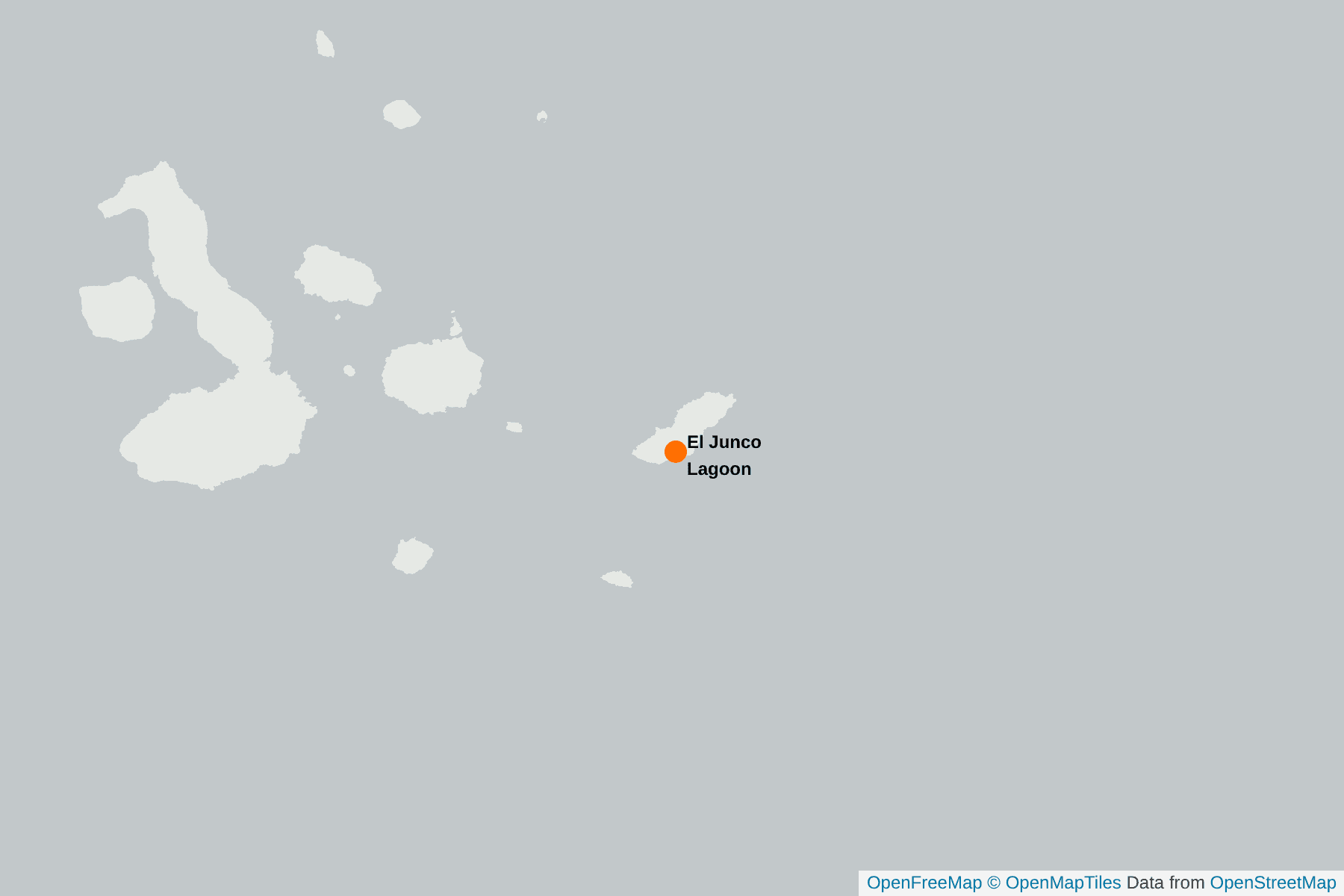
El Junco Lagoon

El Junco Lagoon

One of only a few fresh water lakes in Galápagos

Information about El Junco Lagoon

Biodiversity

Panorama

Accesibility

El Junco Lagoon is one of the very few permanent sources of fresh water in the whole Galápagos. It avoids evaporation thanks to its elevation - some 2,300ft above sea level in the moist highlands of San Cristobal. The journey to visit is via a 45 minute bus ride from Puerto Baquerizo Moreno. The name comes from the many sage or "junco" plants that can be found around the lagoon. El Junco covers some 72,000 square yards and holds over 7 1/2 million gallons of fresh water.

The lagoon formed because this is the site of a collapsed cone of a long-extinct volcano. The source of water here is purely rain, and so the depth of the lake varies throughout the year, but it has never dried out in living memory. In fact scientists think the lagoon may have stayed filled since the end of the last ice age.

On your way to the lagoon itself you'll climb up through several different vegetation zones before you reach this wonderful viewpoint. As well as a superb place to drink in the wonderful landscape, it's also a great place to observe a wide variety of bird species, including rare mockingbirds, pintail ducks and even frigatebirds, who come here to bathe their feathers in the fresh water. Surrounding the lagoon are tree ferns and Miconia bushes.

Interesting facts about El Junco Lagoon

Stunning vistas

Wide variety of bird life

Pictures of El Junco Lagoon

El Junco Lagoon

Possible Activities in El Junco Lagoon

hiking

Hiking

Highlights Close to El Junco Lagoon

Arrival at San Cristóbal airport + transfer to ship (organized)
Arrival at San Cristóbal airport+transfer to ship

Welcome to Galápagos! After your flight lands, and you have completed the immigration process, our English-speaking guide will meet you in the Arrivals lounge if you booked your flight tickets with us for the same cruise dates. The guide will then escort you to your transfer vehicle for a short journey to your waiting ship.

If you did not book your flight tickets with us, your voucher will specify the meeting point & time. Please note that the transfer to the meeting point is not included.

San Cristobal is home to the official capital city of the Galápagos, Puerto Baquerizo Moreno, and one of the archipelago's 2 airports. We don't know of any other airport where jet airliners land that is within walking distance of the town it serves, as is the case here on San Cristobal - you can stroll to the centre of town from the terminal in 15 minutes!

Once on board your ship, you will be introduced to the crew and given a welcome briefing as well as an important safety drill. After this you'll be shown to your cabin. While you're served a well-deserved and delicious lunch, the captain will cast off and your adventure truly starts.

Note: If you are already in San Cristóbal before the cruise and want to meet the group there, please let us know. This is no problem at all and the transfer from Puerto Baquerizo Moreno and back couldn't be easier.

Interpretation Center Gianny Arismendi

The Gianny Arismendi Galápagos Interpretation center in San Cristóbal, Galápagos, aims to provide a complete history of the Galápagos and give visitors a more holistic understanding of these islands' unique habitats and wildlife.

There are also interesting exhibits covering the Galápagos' human history, and the conservation efforts in place to preserve the archipelago, and undo some of damage human occupation has brought.

For those who are interested in the geology of the archipelago there is a complete exhibit on the volcanic birth of the Galápagos and how this impacted on the habitats present here.

Your Galapatours expert guide will be able to answer any further questions raised by your visit to the Center and can help you to link what you will learn here to what you will see as your Galápagos journey continues.

Where does the name Gianny Arismendi come from? The Directorate of the Galápagos National Park recognized park ranger Gianni Arismendi Guerrero, one of the park rangers of San Cristóbal, for his 27 years of work dedicated to environmental education.

Galapagos Sea Lion
Isla Lobos Dive Site

One of the best spots in Galápagos to observe sea lion pups, trumpet fish and blue footed boobies.

Lobos Island is named after the colony of Galápagos Sea Lions that live here, but they aren't the only native Galápagos species that calls this narrow island home. In the water, you will find Fur Seals fishing Blue-Footed Boobies, Trumpet Fish, Green Turtles, Rays and white-tip reef sharks. With a bit of luck, you might also spot marine iguanas, although they are not hugely common here!

Kicker Rock
Kicker Rock

Kicker Rock (or Leon Dormido, "sleeping lion", locally) is an iconic feature of Galápagos geology, and is one of the most popular photograph opportunities in the archipelago.

Kicker Rock is the remains of a volcanic "tuff cone". Tuff cones are formed when hot magma meets cold seawater, and the resulting explosion forms the rocky structure seen today. Over countless years erosion has caused a split, opening a narrow channel that small boats can sail completely through, and offering an amazing view as you sail around this 490ft tall monolith!

As you navigate around the rock you will see Galápagos Blue-Footed Boobies, Nazca Boobies, and Frigatebirds as they launch themselves from their roosts in the cliffs high above.

La Galapaguera "Jacinto Gordillo Breeding Center"
La Galapaguera / Cerro Colorado

Also known as Cerro Colorado, this is one of the newer visitor sites in Galápagos and was opened in 2003. Previously accessible only from the coast via a long hike, it's now possible to travel by road from Puerto Baquerizo Moreno, where the trip takes about an hour.

This breeding station has an informative visitor center that allows you to learn about the origins and evolution of the Galápagos Giant Tortoises, and about the steps being taken to preserve the species from threats such as habitat destruction and introduced species.

In the center you will see baby hatchlings and young tortoises. After they reach 4 months old they are taken out to be released into the natural habitat in the area. There is a short hiking trail where you may be able to spot giant tortoises in the wild.

Lobos Island
Lobos Island

Lobos Island is named after the colony of Galápagos Sea Lions that live here, but they aren't the only native Galápagos species that calls this narrow island home. You can see Galápagos Fur Seals basking here, and there is a nesting colony of Blue-Footed Boobies that come to Lobos each year to raise their chicks.

There are one or two short hiking trails that lead into the center of the island, and this is always a peaceful place to visit. Galapatours visitors tell us it's one of their favorite visitor sites to just sit and soak up the Galápagos atmosphere.

Back on the beach, the swimming and snorkeling is wonderful, and thanks to the island's position close to the main shore of San Cristobal, the channel between them is sheltered and the turquoise water is crystal clear.  This is a Galapatours favorite spot, so speak to one of our Galápagos specialists if you want help choosing an itinerary that includes a visit to this special place.

Pitt Point
Pitt Point

Pitt Point, or Punta Pitt, is at the far eastern edge of San Cristobal. Following a wet landing directly onto the beach you'll be welcomed by the friendly and noisy barking of the local colony of Galápagos Sea Lions! This is actually a bachelor colony of males who haven't held a breeding territory, and they can sometimes be the worse for wear if they have been fighting on one of the breeding beaches elsewhere.

After the noise of the beach, a quieter path takes us up the cliffs to a breeding site used by all 3 resident species of booby - the Blue-Footed, Red-Footed and Nazca Boobies. Nowhere else in the Galápagos do all three species nest side-by-side like this.

As well as this unique booby colony you can also see Galápagos Frigatebirds and petrels. In addition to the wonderful bird life, the view down to the beach and across the island from this high vantage point make the climb worth it.

The hiking trail lets you get a close look at the Saltbush and other tough shrubs that manage to survive in this sometimes eerie volcanic landscape. Your Galapatours guide will be able to explain in detail how hardy plants such as these colonise the lava fields all over the Galápagos.

Puerto Baquerizo Moreno

The town of Puerto Baquerizo Moreno was founded in the mid-1800s and is the oldest settlement in the Galápagos, as well as being the capital city of the Province. It's the second-largest population centre in the islands.

This pleasant town is home to over 6,000 residents and has two main streets, including Malecón Charles Darwin along the waterfront where there are restaurants, souvenir shops, and hotels. Its main sources of revenue are from fishing and from tourism.

The small town beach is reserved just for the local population of Galápagos Sea Lions, which the locals seem to treat almost as equal citizens! You can often see them lounging on benches by the waterfront or lying on the decks of boats.

Further along the coast to the north are public beaches for the human residents and visitors, and Puerto Baquerizo Moreno is gaining a reputation as a South American "surfing hotspot", with Tongo Reef to the west of town being a particularly popular surf location.

Puerto Chino
Puerto Chino

This small, pretty beach is across the other side of the island from the town of Puerto Baquerizo Moreno, and it can be accessed by a walking trail from the road that runs past La Galapaguera at Cerro Colorado.

With its white sand and turquoise water, Puerto Chino is a wonderful place to relax and enjoy the sights and sounds of the Pacific Ocean. It's good to swim and snorkel here, and if you do, you may see Galápagos green turtles and stingrays. Sea Lions also sometimes bask on the rocks beside the beach, and you can often see Blue-Footed Boobies.

Here at Galapatours, this is one of our favorite spots as it's out of the way and takes a little effort to get to - but that effort is rewarded with a wonderful location, perfect for a relaxing sunbathe or snorkeling adventure.

Tijeretas Hill
Tijeretas Hill

Translated, this is "Frigatebird Hill", and it's well named! This is a place where both endemic species of frigatebird, the Great Frigatebird and the Magnificent Frigatebird, share a colony.

The hill itself offers a wonderful view of Wreck Bay to the south and to Kicker Rock to the west, but it also provides the perfect opportunity for your Galapatours guide to tell you more about the two species of frigatebird to be found in Galápagos, and how you can tell them apart. There's also a range of native plant species here.

The beach at the bottom of the hill is a nice place to relax, and the waters here are safe for swimming and snorkeling - perfect for cooling off after your climb!

Transfer from ship to San Cristóbal airport (organized)
Transfer to San Cristóbal airport

Your Galápagos adventure ends with the arrival of your ship back at San Cristobal Island. After what many guests describe as an emotional goodbye to your ship and its crew, you'll board the transfer vehicle that will take you on the short journey to the airport in plenty of time for your flight back to the mainland.

Note: If you want to spend some time in Galápagos after your cruise, please let us know. This is no problem at all and the transfer from Puerto Baquerizo Moreno to the airport and back couldn't be easier.

Witch Hill
Witch Hill

The brilliant white coral sand beach at Witch Hill ("Brujo Hill") is, in our opinion, one of the very best in the Galápagos. The hill itself is the remains of a volcanic "tuff cone" - one made up of compacted volcanic ash and debris. This was one of the first sites where Charles Darwin made landfall on his famous journey here on HMS Beagle.

This is a wonderful place to see many Galápagos species, both in the sea and on the land and in the air. Among the creatures you are likely to see on a visit to Brujo Hill are Galápagos Sea Lions, marine iguanas, pelicans, and Galápagos Blue-Footed Boobies. It's possible to walk right along the beach at a leisurely pace, taking in everything around you.

We really recommend you snorkel here, and if you do you'll be rewarded with likely sightings of Galápagos rays, green sea turtles, sponge coral and a wide range of beautiful fish. If you aren't a swimmer, then a panga ride will still let you see plenty of wildlife thanks to the crystal clear waters off this stunning beach.

Animals in El Junco Lagoon

Please be aware that wildlife sightings are never guaranteed and depend on seasons, weather, and other factors.
Galapatours

Galapagos Dove

Galapatours

Vermilion Flycatcher

Galapatours

Galapagos Lava Lizard

Galapatours

White-cheeked Pintail

Galapatours

Galapagos Frigatebirds

Galapatours

Darwin's Finches

Galapatours

Galapagos Mockingbird

Our trips to El Junco Lagoon

Hitomi

Your contact

Hitomi

Call now

+1 347-674-0913

Weekdays from 15:00 to 20:00 CET

​
​
​
​
​
​
Hitomi