%3Aformat(webp)%2F3659cc34-1b3e-4809-890c-c0510563f442-galaxy-diver-iii-header-natural-v2.png&w=1920&q=75)
Darwin & Wolf Diving
8-day Galapagos diving liveaboard with up to 19 dives
Best Price Guarantee
Best Price Guarantee
Length
8 Days
Ship category
Premium
Ship type
Small Yacht
Capacity
16 Passengers
%3Aformat(webp)%2Ff0c6d51c-2df4-432b-a786-74d5040ecedc-galaxy-diver-iii-front-view.webp&w=1920&q=75)
%3Aformat(webp)%2Fprovider%2F0dc1f271-8080-4439-a826-63df24dce14a-deck-plan-composite.jpg&w=1920&q=75)
%3Aformat(webp)%2Fprovider%2F01eff0d3-3fcf-49bd-a703-f7953138bfcd-indoor_areas-4-galaxy-diver-iii-living-room-front-view.webp&w=1920&q=75)
Galaxy Diver III is not a general Galapagos cruise with a little diving added on. She is a dedicated liveaboard for experienced divers who want the remote northern islands, repeated dives and a ship that is organized around dive operations from morning to evening.
The ship carries 16 guests in eight cabins and normally works with two dive guides, which is exactly the kind of ratio serious divers should look for. The dive deck, camera rinse and station setup, tenders and briefing spaces matter more here than decorative lounges. Days can be intense: cold water, currents, early starts and multip … Read more about Galaxy Diver III
%3Aformat(webp)%2Fprovider%2Fa6dce8ad-3344-4daf-82f3-81f098e839f9-upper-convertible.jpg&w=1920&q=75)
%3Aformat(webp)%2Fprovider%2Fa65e9660-d288-4623-b58a-6b7aafa3e89b-main-matrimonial.jpg&w=1920&q=75)
%3Aformat(webp)%2Fprovider%2F96bec33b-07b6-4e17-a3f1-cf437a901bde-main-convertible.jpg&w=1920&q=75)
%3Aformat(webp)%2F85454b23-fe12-491d-b427-92cd0e9d2d28-galaxy-diver-iii-lower-deck.webp&w=1920&q=75)

Nitrox (free)
%3Aformat(webp)%2F3aa3ccae-92df-4716-ad16-b8a8021d3daf-untitled-design.png&w=64&q=75)
Dive Deck

Observation Lounge

Air conditioning & private bathroom

Library
%3Aformat(webp)%2Famenity%2F7695fc72-10e9-4b33-80c3-c14d0a86b665-download.png&w=64&q=75)
Camera Station

Internet/Wifi
-10% for children ≤ 11
Food on Galaxy Diver III needs to work for divers, not just look attractive. Expect practical, filling meals around an active dive schedule, with breaks timed between briefings, equipment preparation and recovery time. The operator notes local-ingredient cooking, but the real value is that meals support long, demanding days in the water.
From
Until
Info
Availability
Price
7
Oct
2026
• 8 days
From
USD 5,760
USD 6,400
7
Oct
2026
14
Oct
2026
Almost full
USD 5,760
USD 6,400
28
Oct
2026
• 8 days
From
USD 5,440
USD 6,400
28
Oct
2026
4
Nov
2026
Almost full
USD 5,440
USD 6,400
4
Nov
2026
• 8 days
From
USD 6,400
4
Nov
2026
11
Nov
2026
Book now
USD 6,400
11
Nov
2026
• 8 days
From
USD 6,400
11
Nov
2026
18
Nov
2026
Book now
USD 6,400
18
Nov
2026
• 8 days
• Flight tickets included
From
USD 5,440
USD 6,400
18
Nov
2026
25
Nov
2026
•
Flight tickets included
USD 5,440
USD 6,400
25
Nov
2026
• 8 days
From
USD 5,760
USD 6,400
25
Nov
2026
2
Dec
2026
USD 5,760
USD 6,400
9
Dec
2026
• 8 days
• Flight tickets included
From
USD 5,760
USD 6,400
9
Dec
2026
16
Dec
2026
•
Flight tickets included
• 4 Spots
Book now
USD 5,760
USD 6,400
16
Dec
2026
• 8 days
• Flight tickets included
From
USD 5,120
USD 6,400
16
Dec
2026
23
Dec
2026
•
Flight tickets included
USD 5,120
USD 6,400
23
Dec
2026
• 8 days
• Flight tickets included
From
USD 5,120
USD 6,400
23
Dec
2026
30
Dec
2026
•
Flight tickets included
USD 5,120
USD 6,400
30
Dec
2026
• 8 days
• Flight tickets included
From
USD 5,760
USD 6,400
30
Dec
2026
6
Jan
2027
•
Flight tickets included
USD 5,760
USD 6,400
Preferred date unavailable?
When booking online, you can choose the option to "Upgrade to single occupancy". This will guarantee you the whole cabin to yourself, for an additional fee. If you don't select this option, then another traveler of the same sex might be placed into the same cabin with you.
Meals from lunch on the first day through breakfast on the final day
Water, coffee and tea
Bilingual English- and Spanish-speaking naturalist guide
Cruise director
Diving and activities listed in the itinerary
Free Nitrox for certified Nitrox divers
Your trip helps protect 36 hectares of rainforest in Ecuador through Forest Guardians
International and domestic flights
Galapagos National Park entrance fee: USD 200
Transit Control Card: USD 20
Alcoholic drinks and soft drinks
Tips
Personal expenses
Travel insurance
Activities and services not listed as included
Rental diving equipment
Minimum Open Water Diver license or equivalent, plus a total of at least 50 logged dives.
Non-divers are not accepted on this diving itinerary.
A 7 mm wetsuit is recommended; rental diving equipment is available but is not included.
The planned maximum diving depth is 30 m.
After completing your booking, you will receive an invoice from your travel specialist by email. A deposit of 20% of the trip price is required to secure your booking. Payment can be made through bank transfer or by credit card through a secure payment link.
Full payment is expected 30 days before the trip. Payment can be made in installments.
Under Ecuadorian law, if you are only temporarily visiting the Galápagos then you are exempted from the requirement to pay any customs charges on items that you are bringing in to the country. This includes new or used portable electronics such as cameras, laptops, music players, etc.
You MUST NOT bring any agricultural or plant materials or any unprocessed food products to the islands. To avoid problems at customs and bag check we suggest only traveling to Galápagos with pre-wrapped snack products such as chocolate bars, etc. Food is plentiful and freshly cooked on your Galapatours cruise, with a wide range of choice on offer to suit all tastes - you really don't need to bring anything with you!
As the Galapagos Islands are part of Ecuador, and all flights to the Galapagos depart from mainland Ecuador, you will need to enter Ecuador first.
Entering Ecuador: Every traveler is responsible for checking the individual visa requirements for their nationality. We recommend using https://www.passportindex.org/ to find out if you need a visa for Ecuador. At the time of writing, U.S. citizens do not need to apply for a visa beforehand. Similarly, visitors from the UK, Germany, and most other European countries do not require a visa for the Galapagos Islands. Upon entering the country, you will be given a visa stamp that permits you to stay in Ecuador for up to 90 days. This also applies to many other countries, but please verify the current visa regulations yourself before booking any tickets. In any case, your passport must be valid for at least six more months from the date of entry into Ecuador. You will also need to show proof of onward or return travel out of Ecuador to customs and immigration officials upon arrival; this can be a return or onward airline ticket. If you do not meet these requirements, you may not be allowed to enter the country.
Entering Galapagos: To enter Galápagos, the first official requirement is a valid Ecuadorian tourist visa stamp in your passport - this should have been issued to you upon arrival to mainland Ecuador.
This is a multi-layered question, that we have tried to answer in various articles. Please click on the corresponding links to learn more about the different topics. To recap:
The Galápagos National Park Entrance fee is levied on all visitors to the islands. For foreign visitors, the entry fee is 200 USD per person (100 USD for children under 12 years old). If you are a citizen of a country in South America you might pay less, check here for more information.
Important: This fee must be paid, in cash, at the airport of arrival. Payment by card is possible, but a surcharge will apply. If you do not pay, you will not be allowed to leave the terminal - so please make sure you have the means to pay the Galápagos entrance fee! Therefore, the payment of this entrance fee is indispensable to take part in a Galapagos cruise.
The entrance fees collected will be allocated to various local entities to support sustainability and community development in the Galápagos Islands. The proceeds are split between several important institutions as follows:
For more information about the entrance fee structure and the distribution of funds, please visit the official website of the Galápagos National Park Administration.
%3Aformat(webp)%2Ffaq%2F5df51b34-2561-4dbb-918d-707d0fc13212-unnamed.png&w=1920&q=75)
To protect the fragile ecosystems of the Galápagos, all travelers must complete two essential biosecurity procedures before their flight. First, travelers aged 18 and over are required to fill out the mandatory online Goods Declaration form up to 48 hours before departure. This declaration requires you to report any food, plants, seeds, camping equipment, or recent contact with animals. After submitting the form, you will receive a QR code via email, which must be presented to authorities upon arrival in the Galápagos.
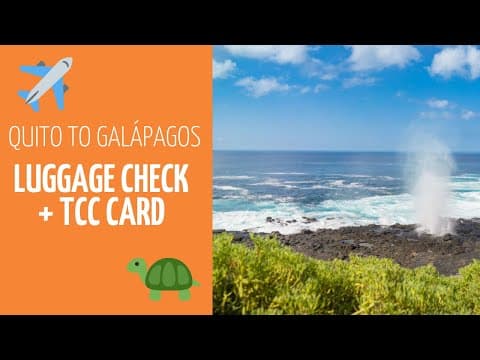
Second, you must take your luggage to the SICGAL inspection counter at the airport in either Quito or Guayaquil. Here, officials will conduct a physical check of your bags to ensure no prohibited items are being brought to the islands.
To make sure you don't have any trouble here, please do not attempt to travel with any foods other than small quantities of pre-wrapped snack items like chocolate bars or similar, and certainly don't have any plants or plant materials in your bags. Once checked, you will receive an approval label to attach to your bags, and you can then make your way to your airline check in.
%3Aformat(webp)%2Ffaq%2F88d8dd15-d759-44c8-b9b7-94cb9b8ecf2d-img_1258-copy.jpg&w=1920&q=75)
Price
From
USD 5,120
No dates selected
From
Hammerhead encounters around Darwin and Wolf
El Arenal at Darwin Island
Marine life at Vicente Roca Point
Marine iguanas around Cape Douglas
Best Price Guarantee: Find a better price elsewhere, and we’ll match it.
Galapagos Expedition Specialists: We focus exclusively on Galapagos expeditions, with advice rooted in real, firsthand expertise.
Travel that gives back: Every booking directly funds our mission to protect and restore global rainforests.
Darwin and Wolf are the reason experienced divers cross the world to reach the Galapagos: the chance to descend among schooling hammerheads, blacktip sharks, big-eyed jacks and, when conditions align, whale sharks. This route concentrates 12 of up to 19 planned dives around these remote northern islands. Our specialists recommend it for divers who want the ocean—not land visits—to set the pace of the week.
With only 16 divers and two dive guides, the group stays compact and focused. The rhythm can be demanding: early starts, dinghy entries and as many as four dives in a day, often in cold water and strong currents. That intensity is exactly what makes the program exceptional for confident divers—and why it is not an entry-level cruise or a fit for non-diving companions.
Galaxy Diver III makes the time between dives feel considered rather than incidental. She is a beautiful, comfortable base with an efficient dive deck, gear and camera stations, rinse areas and hot showers. After the final dive, evening lectures add context to what you have seen, while the lounge, outdoor spaces and large sunroof invite you to slow down and compare the day's encounters before doing it all again the next morning.
%3Aformat(webp)%2Ffebaaf06-7768-4601-844a-4bd71e00eb0c-vsocial.png&w=1920&q=75)
Every travel booking supports local communities through a donation to our V Social Foundation.
Your itinerary below may vary, depending on the weather, wildlife breeding, and local conditions.
%3Aformat(webp)%2Fhighlight%2F551bcd63-e7ce-4e5e-9e4c-c3496b792da7-2018-08-09-day-1-nemo-1-baltra-airport-santa-cruz-puerto-ayora-charles-darwin-research-station-78-of-489-.jpg&w=1920&q=75)
Welcome to Galápagos! After your flight lands, and you have completed the immigration process, our English-speaking guide will meet you in the Arrivals lounge if you booked your flight tickets with us for the same cruise dates. The guide will then escort you to your transfer vehicle for a short journey to your waiting ship.
If you did not book your flight tickets with us, your voucher will specify the meeting point & time. Please note that the transfer to the meeting point is not included.
Baltra Island, where your arrival airport is, was used as an important Air Force base in the Second World War. This is the primary airport for the Galápagos Islands and you'll be rubbing shoulders with fellow tourists, international naturalists and conservationists, researchers and academics, and Galápagos residents alike. The airport has been built as a "green" airport, and as well as using recycled materials in its construction, it's special design keeps the buildings relatively cool without the need for any air conditioning.
Once on board your ship, you will be introduced to the crew and given a welcome briefing as well as an important safety drill. After this you'll be shown to your cabin. While you're served a well-deserved and delicious lunch, the captain will cast off and your adventure truly starts.
Note: If you plan to spend a few days prior to the cruise in Puerto Ayora and want to do the cruise later this is no problem at all. The transfer from Puerto Ayora to Baltra is very easy.
%3Aformat(webp)%2Fgal%2Fhighlight%2Fcarrion-point.jpg&w=1920&q=75)
Carrion Point on the eastern coast of Santa Cruz protrudes into the ocean, creating a sheltered cove which is a superb place to snorkel.
There's no landing here, you can simply dive into the water from your boat. The sheltered waters are crystal clear and you will see a wide range of marine wildlife, including Galápagos rays, sharks, and innumerable tropical fish.
A panga ride along the coast here will also allow your Galapatours guide to tell you more about the bird species and about the ecology of this part of Santa Cruz in general.
Carrion Point is often used as a dive site before the long trip north to Wolf and Darwin Islands, so you may have your first "proper" Galápagos dive here.
The site is typical of the Galápagos, with rocky slopes and a boulder-strewn reef with only ocasional patches of sand. The habitat is very rich here, and you are likely to encounter a wide range of tropical fish, as well as hammerhead sharks, reef sharks, manta rays, as well as the ever-curious Galápagos Sea Lions.
%3Aformat(webp)%2Fgal%2Fhighlight%2Fgalapatours_darwin_4.jpg&w=1920&q=75)
Shark Bay at Wolf Island is an underwater visitor point well known as being among THE best dive sites in Galápagos to see Hammerheads and Galápagos Sharks. Whale sharks have alse been encountered here, as well as a huge range of fish, rays, turtles, marine mammals and many more iconic Galápagos creatures.
%3Aformat(webp)%2Fgal%2Fhighlight%2Fbanana.jpg&w=1920&q=75)
North Islet is a small outcrop just off the north coast of Wolf, and because of the wall's shape it's known to locals as "the banana"!
This is a stunning sheer wall with caverns, tunnels and other wonderful rock formations. Depth here ranges from 30 to 120ft and the visibility is usually excellent, varying from 40 to 80ft depending on season. There is always a moderate to heavy current here.
A superb site for spotting Galápagos sharks, hammerheads, manta rays, green turtles and a wide range of fantastic Galápagos marine life.
%3Aformat(webp)%2Fgal%2Fhighlight%2Flandslide.jpg&w=1920&q=75)
El Derrumbe is particularly well known as THE dive in Galápagos to see Hammerheads and Galápagos Sharks. Whale sharks have alse been encountered here, as well as a huge range of fish, rays, turtles, marine mammals and many more iconic Galápagos creatures.
%3Aformat(webp)%2F7043bb1e-f9b6-4442-a61c-4078864b7ab3-darwin-island-diver-lll-02.webp&w=1920&q=75)
El Arenal is a dive-only highlight at Darwin Island, with no landing and no beach visit. Underwater, the site follows a sandy slope below the area of the former Darwin's Arch, now Darwin's Pillars. It is one of the places divers look for classic far-northern Galapagos encounters: scalloped hammerheads around cleaning-station activity, whale sharks in season, Galapagos and blacktip sharks, rays, green turtles, dolphins, tuna, jacks and other schooling fish.
The setting is also what makes the site demanding. Currents are usually moderate to strong, and published dive descriptions place the depth roughly between 14 and 37 metres. This is not a casual snorkeling stop; it belongs on liveaboard dive itineraries for confident, experienced divers who are comfortable following a guide in current.
Wildlife is never guaranteed, especially with large pelagic animals. The reason El Arenal matters is the combination of Darwin Island's remote position, nutrient-rich current, cleaning stations and open-ocean exposure. When conditions line up, it can feel like a front-row seat to the marine life that makes Darwin and Wolf so important in the Galapagos.
%3Aformat(webp)%2Fhighlight%2F3307b4e2-419d-48b4-97ab-a74cdc0f9e8c-op_211224_galapagos_01943.jpg&w=1920&q=75)
Huge schools of hammers and Galápagos sharks, whale sharks, Mantas: Darwin's Towers (formerly: Darwin's Arch) is arguably one of the world's best diving sites.
Located just off the southeast tip of Darwin Island, the islet of Darwin's Towers (formerly known as Darwin's Arch, but the arch collapsed in 2021) is a fantastic marine wonderland. The main attractions are the whale sharks and hammerhead sharks that often gather here. But there are many other species you can find - green turtles, majestic manta rays, dolphins, large schools of fish, and other species of sharks are all frequent encounters.
We have met divers with over 1000 logged dives that still called it the single best diving site of their life! If you have any particular species that you are keen to see on your dive, contact one of our Galápagos experts today, and we can advise on the best dive itinerary to suit your requirements.
El Derrumbe is particularly well known as THE dive in Galápagos to see Hammerheads and Galápagos Sharks. Whale sharks have alse been encountered here, as well as a huge range of fish, rays, turtles, marine mammals and many more iconic Galápagos creatures.
Shark Bay at Wolf Island is an underwater visitor point well known as being among THE best dive sites in Galápagos to see Hammerheads and Galápagos Sharks. Whale sharks have alse been encountered here, as well as a huge range of fish, rays, turtles, marine mammals and many more iconic Galápagos creatures.
El Arenal is a dive-only highlight at Darwin Island, with no landing and no beach visit. Underwater, the site follows a sandy slope below the area of the former Darwin's Arch, now Darwin's Pillars. It is one of the places divers look for classic far-northern Galapagos encounters: scalloped hammerheads around cleaning-station activity, whale sharks in season, Galapagos and blacktip sharks, rays, green turtles, dolphins, tuna, jacks and other schooling fish.
The setting is also what makes the site demanding. Currents are usually moderate to strong, and published dive descriptions place the depth roughly between 14 and 37 metres. This is not a casual snorkeling stop; it belongs on liveaboard dive itineraries for confident, experienced divers who are comfortable following a guide in current.
Wildlife is never guaranteed, especially with large pelagic animals. The reason El Arenal matters is the combination of Darwin Island's remote position, nutrient-rich current, cleaning stations and open-ocean exposure. When conditions line up, it can feel like a front-row seat to the marine life that makes Darwin and Wolf so important in the Galapagos.
%3Aformat(webp)%2Fgal%2Fhighlight%2F20170224_Day_4_Isabela_Punta_Albemarle_Punta_Vicente_Roca_253_of_473.jpg&w=1920&q=75)
Galapatours clients regularly rate Vicente Rock Point as one of the best snorkeling and SCUBA diving sites in Galápagos, or perhaps even in the world! There is no landing here, and snorkeling is done directly from the boats. The scenery around the Point is stunning - the remains of two ancient volcanoes made this formation, and the cliffs and caves around the bay provide an amazing backdrop.
The bay is well sheltered from ocean swells, making it ideal for snorkelers of any experience. The cold-water currents bring a rich stock of food to these waters, and the bay around Vicente Rock Point is often home to feeding frenzies, with groups of whales, dolphins, Galápagos Sea Lions, tuna, Blue-footed Boobies and other marine birds all feeding together, making for spectacular sights.
Many boats also take visitors on a panga ride along the shore, offering the chance to explore some of the caves and to encounter some of the other species such as Galápagos Flightless Cormorants and a small colony of Galápagos Fur Seals.
%3Aformat(webp)%2Fgal%2Fhighlight%2Fmarine-iguana.jpg&w=1920&q=75)
A dive in Cape Douglas off the west coast of Isabela Island is a fantastic opportunity to see a wide array of marine life, both above and below the surface of the water.
As you prepare for your dive you can see Galápagos Flightless Cormorants, Galápagos Penguins and Galápagos Marine Iguanas - all species you cannot see anywhere else in the world except this archipelago.
As you enter the water, you may have the opportunity to admire the powerful swimming ability of the marine iguanas as the bigger males feed on the rocks deeper under the surface.
Other species you may see in the water include Red-lipped Batfish, Horn Sharks and Mola Mola, and sometimes Baleen Whales are seen here gliding through the water.
If you have particular species that you are keen to see, contact one of our Galápagos experts today who can help you choose an itinerary that will best meet your requirements.
%3Aformat(webp)%2Fgal%2Fhighlight%2Fshutterstock_142000978.jpg&w=1920&q=75)
This is a famous site thanks to the wide variety of marine life you can encounter in just one dive, but it is for moderate to advanced divers only. Depths range from 10 to 90ft, with visibility between 30 and 60ft depending on the season. Currents here are moderate, and surges will be experienced in the shallows.
In the water you'll encounter sloping rock plate formations and a fantastic wall that drops far down out of sight. These rocky formations are home to seahorses, Galápagos black coral, octopus, a wide range of tropical fish and Galápagos sharks and hammerheads.
When you add to this the friendly sea lions who almost always come to play with divers and the elegant green turtles that cruise past, this dive site really does have it all.
%3Aformat(webp)%2Fgal%2Fhighlight%2F_MG_8273_Ecuador_Galapagos.jpg&w=1920&q=75)
Santa Cruz is the only island on the Galápagos that allows you to travel through every habitat type that exists in the archipelago. This makes the journey north from the coast up into the highlands a fantastic opportunity to experience the breadth of life that exists on these islands.
Your bus journey starts from Puerto Ayora on the coast and you slowly start to climb through the agricultural zone where open fields begin to give way to lush, green, mist-covered forests. This is a marked contrast to many of the islands which are at much lower elevation and much more arid. This rich verdant landscape is predominantly made up of dense Scalesia forest.
Your expert Galapatours guide will stop several times along the route to allow you to explore various different sites. Among the stops will be a Giant Tortoise reserve, and also a visit to the famous lava tubes. Over half a mile long, a walk through these natural volcanic features is eerie and unforgettable.
Also along the way you will stop for refreshments, and you'll be able to try locally-grown Galápagos coffee - we think it's among the best we've ever tasted!
%3Aformat(webp)%2Fgal%2Fhighlight%2F20170227_Day_8_SAMBA_Floreana_Asilo_de_la_Paz_Cerro_Alieri_Devil_s_Crown_468_of_473.jpg&w=1920&q=75)
Your Galápagos adventure ends with the arrival of your ship back at Baltra Island. After what many guests describe as an emotional goodbye to your ship and its crew, you'll board the transfer vehicle that will take you on the short journey to the airport in plenty of time for your flight back to the mainland.
Note: If you want to spend some time in Galápagos after your cruise, please let us know. This is no problem at all and the transfer from Baltra to Puerto Ayora couldn't be easier.
%3Aformat(webp)%2Fgal%2Fanimal%2Fgalapagos-finches-3.jpg&w=1920&q=75)
%3Aformat(webp)%2Fgal%2Fanimal%2Fsea-lion-2.jpg&w=1920&q=75)
%3Aformat(webp)%2Fgal%2Fanimal%2F20170225_Day_5_Fernandina_Punta_Espinosa_Isabela_Urbina_Bay_280_of_473.jpg&w=1920&q=75)
%3Aformat(webp)%2Fgal%2Fanimal%2FDove_227_of_240_.jpg&w=1920&q=75)
%3Aformat(webp)%2Fgal%2Fanimal%2FBrown_Pelican_181_of_240__1.jpg&w=1920&q=75)
%3Aformat(webp)%2Fgal%2Fanimal%2F20150524_2850_A_giant_Iguana_on_the_Galapagos_Islands_Ecuador.jpg&w=1920&q=75)
%3Aformat(webp)%2F81940802-faec-488d-8840-a911b88ed081-logo_galapagos-white.png&w=1920&q=75)
%3Aformat(webp)%2Fgal%2Fanimal%2Fblue-footed-boobie.jpg&w=1920&q=75)
%3Aformat(webp)%2Fgal%2Fanimal%2Ffrigate-bird-2.jpg&w=1920&q=75)
%3Aformat(webp)%2Fgal%2Fanimal%2FLava_Lizard_192_of_240_.jpg&w=1920&q=75)
%3Aformat(webp)%2Fgal%2Fanimal%2FSky_54_of_82_.jpg&w=1920&q=75)
%3Aformat(webp)%2Fgal%2Fanimal%2F20170222_Day_2_Genovesa_Darwin_Bay_Prince_Phillips_Steps_85_of_473.jpg&w=1920&q=75)
%3Aformat(webp)%2Fgal%2Fanimal%2FPetrel_30_of_240__1.jpg&w=1920&q=75)
%3Aformat(webp)%2Fgal%2Fanimal%2FSunfish_154_of_240__1.jpg&w=1920&q=75)
%3Aformat(webp)%2Fgal%2Fanimal%2FShearwater_17_of_240_.jpg&w=1920&q=75)
%3Aformat(webp)%2Fgal%2Fanimal%2Fspotted-eagle-ray_1.jpg&w=1920&q=75)
%3Aformat(webp)%2Fgal%2Fanimal%2FSky_76_of_82_.jpg&w=1920&q=75)
%3Aformat(webp)%2Fgal%2Fanimal%2FSky_5_of_82__1.jpg&w=1920&q=75)
%3Aformat(webp)%2Fgal%2Fanimal%2FSky_80_of_82__1.jpg&w=1920&q=75)
%3Aformat(webp)%2Fgal%2Fanimal%2Fgalapagos-fur-seal-1.jpg&w=1920&q=75)
%3Aformat(webp)%2Fgal%2Fanimal%2F20170222_Day_2_Genovesa_Darwin_Bay_Prince_Phillips_Steps_81_of_473.jpg&w=1920&q=75)
%3Aformat(webp)%2Fgal%2Fanimal%2FMobula_240_of_240__1_1.jpg&w=1920&q=75)
%3Aformat(webp)%2Fgal%2Fanimal%2FSea_Robin_165_of_240__1.jpg&w=1920&q=75)
%3Aformat(webp)%2Fgal%2Fanimal%2FPenguin_5_of_240__1.jpg&w=1920&q=75)
%3Aformat(webp)%2Fgal%2Fanimal%2FLava_Heron_50_of_240_.jpg&w=1920&q=75)
%3Aformat(webp)%2Fgal%2Fanimal%2FBarn_Owl_58_of_240__1.jpg&w=1920&q=75)
%3Aformat(webp)%2Fgal%2Fanimal%2Fvermillion-flycatcher_1.jpg&w=1920&q=75)
%3Aformat(webp)%2Fgal%2Fanimal%2F20150522_2808_Visiting_a_Ranch_with_Giant_Turtles_on_Santa_Cruz_Galapagos.jpg&w=1920&q=75)
%3Aformat(webp)%2Fgal%2Fanimal%2FRed_Bat_214_of_240_.jpg&w=1920&q=75)
%3Aformat(webp)%2Fgal%2Fanimal%2FRacer_128_of_240__1.jpg&w=1920&q=75)
%3Aformat(webp)%2Fgal%2Fanimal%2FRail_225_of_240__1.jpg&w=1920&q=75)
%3Aformat(webp)%2Fgal%2Fanimal%2Fshort_eared_owl_galapatours.jpg&w=1920&q=75)