%3Aformat(webp)%2Fgal%2Fprovider%2Fc%2Fa%2Fcachalote_explorer_1_of_1_.jpg&w=1920&q=75)
Isabela Route
6 Days Galapagos cruise on board the Cachalote Explorer
Best Price Guarantee
Best Price Guarantee
Length
6 Days
Ship category
Premium
Ship type
Small Yacht
Capacity
16 Passengers
%3Aformat(webp)%2Fgal%2Fprovider%2Fc%2Fa%2Fcachalote_explorer_31_of_37_.jpg&w=1920&q=75)
%3Aformat(webp)%2Fprovider%2Fad978f6d-3f82-4ac7-96a2-05665d7d2e40-cachalote-explorer-deck-plan.png&w=1920&q=75)
%3Aformat(webp)%2Fgal%2Fprovider%2Fc%2Fa%2Fcachalote_explorer__8_of_10_99_19511.jpg&w=1920&q=75)
Cachalote Explorer has one of the better backstories in the Galapagos fleet: a sturdy Canadian fishing vessel, built for rough West Coast waters, converted in 2017 into a small expedition yacht for just 16 guests. That heritage still matters. She feels solid, stable and purposeful, with the kind of character you do not get from a purely hotel-style yacht.
What we appreciate most is that the conversion did not erase her expedition soul. Inside, the refit is much more comfortable than the working-boat origin suggests. There are eight air-conditioned cabins, all with private bathrooms and hot an … Read more about Cachalote Explorer
%3Aformat(webp)%2Fservice%2F833f8aed-d823-4ebf-b6b2-51fbbaffa1f6-triple.jpg&w=1920&q=75)
%3Aformat(webp)%2Fservice%2F2460db39-3b20-4de9-a012-fa6b8888abbb-cach1.jpg&w=1920&q=75)
%3Aformat(webp)%2Fservice%2Fec54aecf-1c57-44dd-8ccf-b5b4326b3d71-bathroom.jpg&w=1920&q=75)

Transfers to and from ship

Snorkel gear (free of charge)
Travel for good: Each booking supports Ventura's Conservation Project.

Water, Coffee, Tea & fresh juices

Wetsuits

English guides

Single travellers can share cabin

Single cabin without supplement

All meals

Kayaks on board

Air conditioning & private bathroom
-50% for children ≤ 11
Meals on Cachalote Explorer are served in the broad salon and dining area, usually with the easy, communal rhythm that suits a 16-guest expedition yacht. Expect fresh, satisfying cruise cooking with Ecuadorian and international touches, planned around early landings, snorkeling outings and evening briefings. The experience is not formal fine dining; it is relaxed, friendly and closely tied to the day’s exploration.
From
Until
Info
Availability
Price
25
Sep
2026
• 6 days
• 15% OFF
From
USD 3,273
USD 3,850
25
Sep
2026
30
Sep
2026
•
15% OFF
USD 3,273
USD 3,850
9
Oct
2026
• 6 days
• 25% OFF
From
USD 2,888
USD 3,850
9
Oct
2026
14
Oct
2026
•
25% OFF
USD 2,888
USD 3,850
23
Oct
2026
• 6 days
• 10% OFF
From
USD 3,465
USD 3,850
23
Oct
2026
28
Oct
2026
•
10% OFF
• 4 Spots
Book now
USD 3,465
USD 3,850
6
Nov
2026
• 6 days
From
USD 4,100
6
Nov
2026
11
Nov
2026
USD 4,100
20
Nov
2026
• 6 days
From
USD 3,850
20
Nov
2026
25
Nov
2026
Almost full
USD 3,850
4
Dec
2026
• 6 days
From
USD 3,850
4
Dec
2026
9
Dec
2026
USD 3,850
18
Dec
2026
• 6 days
From
USD 3,850
18
Dec
2026
23
Dec
2026
USD 3,850
9
Apr
2027
• 6 days
From
USD 3,950
9
Apr
2027
14
Apr
2027
USD 3,950
23
Apr
2027
• 6 days
From
USD 3,380
23
Apr
2027
28
Apr
2027
USD 3,380
7
May
2027
• 6 days
From
USD 3,380
7
May
2027
12
May
2027
USD 3,380
Preferred date unavailable?
When booking online, you can choose the option to "Upgrade to single occupancy". This will guarantee you the whole cabin to yourself, for an additional fee. If you don't select this option, then another traveler of the same sex might be placed into the same cabin with you.
Accommodation in the booked cabin
All meals and snacks from lunch on Day 1 through breakfast on Day 6
Certified English- and Spanish-speaking naturalist guide
All excursions and activities described in the itinerary
Snorkeling equipment, including a short wetsuit, mask and fins
Use of kayaks where offered and permitted
Transfer from the yacht to Baltra Airport on the final day
Your trip helps protect 36 hectares of rainforest in Ecuador through Forest Guardians
Flights
Galapagos National Park entrance fee
INGALA Transit Control Card
Alcoholic and bottled beverages
Personal expenses
Gratuities
This cruise begins at the main dock on Isabela. Guests must reach Puerto Villamil before embarkation; it does not begin at Baltra Airport.
After the final North Seymour excursion, the yacht continues to Baltra and the included transfer takes guests to Baltra Airport.
Visitor-site order and activities may change when required by Galapagos National Park operations, weather or sea conditions.
After completing your booking, you will receive an invoice from your travel specialist by email. A deposit of 20% of the trip price is required to secure your booking. Payment can be made through bank transfer or by credit card through a secure payment link.
Full payment is expected 30 days before the trip. Payment can be made in installments.
This trip generates 1.8 t CO₂e. Galapatours regularly measures and monitors the carbon footprint of its journeys and actively reduces emissions through sustainable travel design: no unnecessary flights, fewer feeder flights, integration of rail and public transport, and promoting longer stays for a more balanced relationship between travel distance and impact.
From 2018 to 2024, we supported carbon reduction projects equivalent to the emissions generated. Recognizing the limits of traditional offsetting, we now focus on active environmental protection through our own rainforest project, Forest Guardians.
More information on our climate and environmental responsibility: https://www.venturatravel.org/impact
Under Ecuadorian law, if you are only temporarily visiting the Galápagos then you are exempted from the requirement to pay any customs charges on items that you are bringing in to the country. This includes new or used portable electronics such as cameras, laptops, music players, etc.
You MUST NOT bring any agricultural or plant materials or any unprocessed food products to the islands. To avoid problems at customs and bag check we suggest only traveling to Galápagos with pre-wrapped snack products such as chocolate bars, etc. Food is plentiful and freshly cooked on your Galapatours cruise, with a wide range of choice on offer to suit all tastes - you really don't need to bring anything with you!
As the Galapagos Islands are part of Ecuador, and all flights to the Galapagos depart from mainland Ecuador, you will need to enter Ecuador first.
Entering Ecuador: Every traveler is responsible for checking the individual visa requirements for their nationality. We recommend using https://www.passportindex.org/ to find out if you need a visa for Ecuador. At the time of writing, U.S. citizens do not need to apply for a visa beforehand. Similarly, visitors from the UK, Germany, and most other European countries do not require a visa for the Galapagos Islands. Upon entering the country, you will be given a visa stamp that permits you to stay in Ecuador for up to 90 days. This also applies to many other countries, but please verify the current visa regulations yourself before booking any tickets. In any case, your passport must be valid for at least six more months from the date of entry into Ecuador. You will also need to show proof of onward or return travel out of Ecuador to customs and immigration officials upon arrival; this can be a return or onward airline ticket. If you do not meet these requirements, you may not be allowed to enter the country.
Entering Galapagos: To enter Galápagos, the first official requirement is a valid Ecuadorian tourist visa stamp in your passport - this should have been issued to you upon arrival to mainland Ecuador.
This is a multi-layered question, that we have tried to answer in various articles. Please click on the corresponding links to learn more about the different topics. To recap:
The Galápagos National Park Entrance fee is levied on all visitors to the islands. For foreign visitors, the entry fee is 200 USD per person (100 USD for children under 12 years old). If you are a citizen of a country in South America you might pay less, check here for more information.
Important: This fee must be paid, in cash, at the airport of arrival. Payment by card is possible, but a surcharge will apply. If you do not pay, you will not be allowed to leave the terminal - so please make sure you have the means to pay the Galápagos entrance fee! Therefore, the payment of this entrance fee is indispensable to take part in a Galapagos cruise.
The entrance fees collected will be allocated to various local entities to support sustainability and community development in the Galápagos Islands. The proceeds are split between several important institutions as follows:
For more information about the entrance fee structure and the distribution of funds, please visit the official website of the Galápagos National Park Administration.
%3Aformat(webp)%2Ffaq%2F5df51b34-2561-4dbb-918d-707d0fc13212-unnamed.png&w=1920&q=75)
4.7
(6)
Price
From
USD 2,888
No dates selected
From
6 Reviews
Giant tortoises and flamingo lagoons near Puerto Villamil
Lava landscapes and wildlife at Moreno Point and Elizabeth Bay
Marine iguana colonies on Fernandina
Penguin country around Vicente Roca and Bartolomé
Best Price Guarantee: Find a better price elsewhere, and we’ll match it.
Galapagos Expedition Specialists: We focus exclusively on Galapagos expeditions, with advice rooted in real, firsthand expertise.
Travel that gives back: Every booking directly funds our mission to protect and restore global rainforests.
This compact route begins on Isabela, where Galapagos giant tortoises, a flamingo lagoon and the relaxed streets of Puerto Villamil introduce the archipelago at island level. Over the following days, Cachalote Explorer travels through the volcanic west: black lava at Moreno Point, mangrove channels at Elizabeth Bay, land iguanas at Urbina Bay and the immense marine iguana colonies of Fernandina.
Snorkeling at Vicente Roca and around Bartolomé may bring Galapagos penguins, sea turtles, rays and reef fish into view. The final morning on North Seymour adds frigatebirds and blue-footed boobies before the transfer to Baltra Airport. Choose this six-day route for concentrated time around Isabela and Fernandina, with walks, panga rides, kayaking and snorkeling built into the journey.
%3Aformat(webp)%2Ffebaaf06-7768-4601-844a-4bd71e00eb0c-vsocial.png&w=1920&q=75)
Every travel booking supports local communities through a donation to our V Social Foundation.
Your itinerary below may vary, depending on the weather, wildlife breeding, and local conditions.
Pre-trip add-ons
%3Aformat(webp)%2Fgal%2Fhighlight%2Flatam_galapatours.jpg&w=1920&q=75)
%3Aformat(webp)%2Fhighlight%2Fe5f2aed5-bff7-4249-939c-b9b73c72cde2-2019-11-07-day-7-seaman-journey-santiago-sullivan-bay-and-bartholomew-394-of-497-.jpg&w=1920&q=75)
%3Aformat(webp)%2Fgal%2Fanimal%2F20170225_Day_5_Fernandina_Punta_Espinosa_Isabela_Urbina_Bay_343_of_473.jpg&w=1920&q=75)
%3Aformat(webp)%2Fgal%2Fhighlight%2Farnando-tupiza.jpg&w=1920&q=75)
A short walk from Puerto Villamil on Isabela Island will bring you to the Arnaldo Tupiza Tortoise Breeding Center. The short trail from town is lovely in itself - you follow a boardwalk that takes you across the wetlands and Opuntia cactus fields.
At the breeding centre you can see 5 different subspecies of Galápagos Giant Tortoise that are all native to Isabela, but currently threatened by habitat damage caused by introduced animals and volcanic eruptions. Here, the Giant Tortoise eggs are carefully incubated in a special hatchery, whilst the adults are cared for in large supervised corrals. This careful breeding program is aiming to increase the populations of these remarkable animals to ensure their survival as a wild species that's unique to the Galápagos.
The Puerto Villamil wetlands are one of the most fascinating ecosystems on Isabela Island in Galápagos. This system of brackish lagoons is home to a wide variety of birds, including flamingos, herons, wading birds, and migratory species that find a natural refuge here.
Walking through the wetlands allows visitors to observe wildlife in a calm, open setting with the volcanic landscape of the island as a backdrop. It is an ideal experience for nature lovers and birdwatchers.
%3Aformat(webp)%2Fgal%2Fhighlight%2Fpuerto-villamil.jpg&w=1920&q=75)
The vast majority of Isabela's human population live in Puerto Villamil, which still holds onto its traditional fishing port charm. Indeed many of Galapatours visitors tell us they think it's the prettiest village in the whole archipelago.
The main reason for this is that Villamil had little impact from tourism until the 1990s, the residents quietly making their living from fishing and farming. Then in 1996 a small runway was opened for flights for light aircraft operating inter-island flights. There are now 13 hotels and 18 bars and restaurants in town, compared to only 1 and 2 respectively in 1980! Despite this, the town still enjoys a relaxed and authentic atmosphere.
Villamil enjoys a beautiful long beach, which is picture-book tropics - palm trees line it's bright white coral sand. Behind the beach are several saltwater lagoons which are home to pink flamingos, pintail ducks and several other species. There are several visitor sites that can be the subject of excursions from town on foot, by minibus or panga.
%3Aformat(webp)%2Fgal%2Fhighlight%2F20170226_Day_7_Isabela_Elizabeth_Bay_Punta_Moreno_409_of_473.jpg&w=1920&q=75)
Moreno Point (known locally as Punta Moreno) is a short journey from Elizabeth Bay on the west coast of Isabela Island. You will take a panga ride which will give you great views of the striking rocky shoreline before you make your landing.
Here you will see the eerie site of a huge lava field leading up to the distant Cero Azul volcano. Hiking through this alien landscape you will come across several tidal lagoons, pools and mangroves - all of which provide an oasis for a range of wildlife, particularly bird species. In the larger tidal pools you may see green turtles or sharks, the clear waters giving you a unique opportunity to view them from on land!
On your journey back to the boats from your 1.2 mile hike you're likely to see Galápagos Penguins on the rocky shores as well a range of birds including herons and Galápagos Flamingos. This is a favorite excursion as it combines the opportunity to see coastal species with a hike through stunning landscapes.
%3Aformat(webp)%2Fgal%2Fhighlight%2F20170226_Day_7_Isabela_Elizabeth_Bay_Punta_Moreno_379_of_473.jpg&w=1920&q=75)
On the eastern coast of Isabela, the wide and sheltered Elizabeth Bay is a haven for wildlife. With areas of mangrove on the shore that contrast with the surrounding lava fields, and a myriad of small islets and rocky reefs, this is a particularly rich area for wildlife.
Accessible only by panga (small motorised dinghy), exploring Elizabeth Bay will provide you with an opportunity to get up close and personal with many of Isabela's species. During your 2 hour boat ride around Elizabeth Bay you can see rays, sharks, green sea turtles, Galápagos penguins, pelicans, and plenty of Galápagos Sea Lions. Nearer to the shores and mangroves, you'll see Galápagos Flightless Cormorants and marine iguanas.
Galapatours guests regularly tell us that Elizabeth Bay is one of their favourite Galápagos excursions and visitor sites.
%3Aformat(webp)%2Fgal%2Fhighlight%2F20170225_Day_5_Fernandina_Punta_Espinosa_Isabela_Urbina_Bay_356_of_473.jpg&w=1920&q=75)
Urbina Bay is one of the youngest features in the Galápagos. It was mainly formed in 1954, when a sudden uplift of the land raised the seabed by over 5 metres, and pushed the coastline over 1 km further away. This has resulted in the astonishing site of heads of coral stranded far from the water. Exposed to the air and elements, the coral heads are rapidly deteriorating and are one of the sights of the Galápagos that won't be around for much longer.
Once ashore, a long hiking trail will take you away from the beach and into the island's arid zone. In this habitat, you are likely to see wild Galápagos Giant Tortoises and Galápagos Land Iguanas. As the trail circles back towards the shore line you'll come across colonies of the unique Galápagos Flightless Cormorant.
This is a pleasant area for snorkeling, and as you enter and leave the water you might do so watched by some Galápagos Penguins, who have a colony nearby. This is also one of the best sites to see Galápagos Marine Iguanas feeding underwater.
%3Aformat(webp)%2Fgal%2Fhighlight%2Ftagus-cove.jpg&w=1920&q=75)
Tagus Cove is a sheltered deep-water bay on the western coast of Isabela Island, overlooking Fernandina Island. This natural anchorage has been a popular destination for ships since the 1800s, and when you come ashore you can see ancient graffiti left by whalers and buccaneers.
A steep (but thankfully short) hiking trail then takes you up to the salt water Darwin Lake, formed inside a volcanic cone. How did salt water get all the way up here? Scientists think tsunamis caused by eruptions or landslides on Fernandina may have deposited seawater originally, and then evaporation has made it even more salty over time.
From Darwin Lake, a series of 160 steps takes you to a stunning viewpoint where you will not only enjoy amazing views over the Galápagos, but may also see some unique wildlife, such as Galápagos Hawks, Vermilion Flycatchers, and species of Darwin's Finches.
Your panga ride along the shoreline back to your ship gives a great opportunity to see Galápagos Flightless Cormorants, Galápagos Penguins, Galápagos Martins, and the friendly Galápagos Sea Lions.
%3Aformat(webp)%2Fgal%2Fhighlight%2F20170225_Day_5_SAMBA_Fernandina_Punta_Espinosa_Isabela_Urbina_Bay_294_of_473.jpg&w=1920&q=75)
Fernandina Island has never been colonised by any non-native species, and this makes it ones of the world's most pristine island ecosystems. Coupled with its young age (Fernandina was only formed a few hundred thousand years ago) this makes a visit to this Galápagos island very special indeed.
At Espinosa Point on the northeastern shore of Fernandina the vista is dominated by "La Cumbre", the volcano whose lava fields formed the island. A visit to Espinosa Point is high on many people's list thanks to the number of iconic unique Galápagos species you will see here. As well as the noisy and fun-loving Galápagos Sea Lions, Espinosa Point is a great place to see Marine Iguanas, the wonderful Galápagos Penguins and the unique and endangered Galápagos Flightless Cormorant. If you are very lucky and keep your eyes skyward you may also catch sight of a Galápagos Hawk circling overhead looking for its next meal.
%3Aformat(webp)%2Fgal%2Fhighlight%2F20170224_Day_4_Isabela_Punta_Albemarle_Punta_Vicente_Roca_253_of_473.jpg&w=1920&q=75)
Galapatours clients regularly rate Vicente Rock Point as one of the best snorkeling and SCUBA diving sites in Galápagos, or perhaps even in the world! There is no landing here, and snorkeling is done directly from the boats. The scenery around the Point is stunning - the remains of two ancient volcanoes made this formation, and the cliffs and caves around the bay provide an amazing backdrop.
The bay is well sheltered from ocean swells, making it ideal for snorkelers of any experience. The cold-water currents bring a rich stock of food to these waters, and the bay around Vicente Rock Point is often home to feeding frenzies, with groups of whales, dolphins, Galápagos Sea Lions, tuna, Blue-footed Boobies and other marine birds all feeding together, making for spectacular sights.
Many boats also take visitors on a panga ride along the shore, offering the chance to explore some of the caves and to encounter some of the other species such as Galápagos Flightless Cormorants and a small colony of Galápagos Fur Seals.
%3Aformat(webp)%2Fgal%2Fhighlight%2Fespumilla-beach.jpg&w=1920&q=75)
Espumilla Beach is located at the northern end of James Bay, a large bay on the northwestern coast of Santiago. This is a pretty beach that is fringed with lush green forests.
The beach itself is home to marine iguanas who feed among the rocks at either end of the beach, and it is a good place to snorkel, with visitors often reporting sightings of sharks, rays and octopus. This is also a nesting site for Galápagos green turtles.
There is an inland hiking trail here that takes visitors past a seasonal lagoon that's often bright green thanks to the algae in the water. Here you can find Galápagos flamingos and pin-tail ducks. The trail then loops through the arid zone, where you can see further bird species including Galápagos Hawks that often circle overhead.
%3Aformat(webp)%2Fhighlight%2F57fc0cb5-10e2-481d-897a-ec53ac1b7216-2018-08-12-day-4-nemo1-santiago-egas-port-espumilla-bay-bucaneer-cove-435-of-489-bucaneer-cove-.jpg&w=1920&q=75)
Sited on the northwest coast of Santiago Island, Buccaneer Cove wasn't named as a romantic fancy, but because it actually was used extensively by pirates, privateers, buccaneers and whalers to set anchor and head ashore.
Of all the Galápagos Islands, Santiago was most frequently used as a stop over as it provided easy access to fresh water, wood, and meat. Used since the 1600s as a staging point, the easy-to-catch Giant Tortoises that lived here became a useful source of protein for the sailors. There was a more strenuous journey required up to the highlands in search of water, but the sheltered cove made this a better location than some of the more open coast elsewhere.
Today the steep cliffs above the cove are filled with nesting seabirds, wheeling in the air above the deep red sands of the beach. This is a good site for snorkeling or to stroll along the beach drinking in the sights and sounds of the Galápagos, and you will often find yourself sharing the sand and rocks with sea lions or Galápagos Fur Seals.
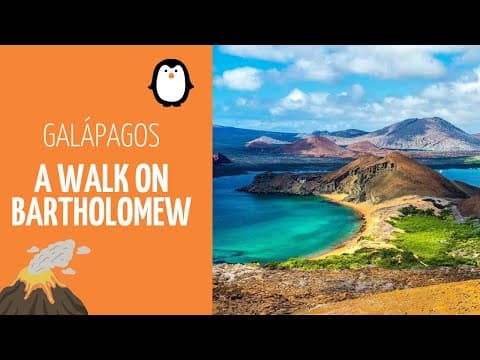
Bartholomew (known as Bartolomé locally) is the most popular excursion for Galápagos visitors, and its iconic scenery is the most photographed in the whole archipelago.
To start your walk on this island you will land in the small bay opposite the famous Pinnacle Rock. You then start the climb to the 375ft peak of Bartholomew. You’ll travel along a half mile trail that includes a series of wooden steps that have been built by the National Park Service to protect the ground here from erosion caused by tourists hiking to the summit.
When you arrive at the top of island the spectacular views will have made your efforts worthwhile. Your Galapatours expert guide will point out all the landmarks you will see from here - Pinnacle Rock itself, jutting skywards. The huge black lava flows of Sullivan Bay. The islands of Daphne Major and Daphne Minor.
On the way back down, you will be able to recognise the different volcanic formations evident on the island, such as tuff cones and volcanic spatter. You'll also see some remarkable examples of the Galápagos' ability to highlight the adaptation of species. For example the bushes that all look dead are actually very much alive, with leaves covered with special grey hairs that help to reflect the harsh sun and reduce moisture loss for the plants.
Back at the beach there is excellent snorkeling, thanks to the underwater caves and rocks in the area. You will see various sharks, rays and tropical fish. You may also see Galápagos Penguins swimming with you!
%3Aformat(webp)%2Fgal%2Fhighlight%2Fseymour-1.jpg&w=1920&q=75)
The island is named after an English nobleman, Lord Hugh Seymour and has an area of 1.9 square kilometers and a maximum altitude of 28 meters. This island is home to a large population of blue-footed boobies and swallow-tailed gulls and hosts one of the largest populations of frigatebirds. North Seymour has a visitor trail approximately 1.2 mi in length crossing the inland of the island and exploring the rocky coast.
North Seymour was formed at the same time as neighboring Baltra Island, and by the same process - an uplifting of undersea lava. This small, flat island has hiking trails throughout, allowing you to explore the arid landscape and to meet the seabirds that call North Seymour home.
North Seymour was the site of one of the earliest conservation experiments in the Galápagos. In 1934 a group of Galápagos Land Iguanas were moved there by Captain Hanckock. They have since thrived, and there are now well over 2,500 of them on the island and more than 3,000 on the neighbouring Baltra island.
The biggest attraction of North Seymour is its large colony of Blue-Footed Boobies and its Frigatebirds. These popular Galápagos species are often found together because the Frigatebirds rely on the Boobies’ fishing prowess. The Frigatebirds actively steal the Boobies catch to feed themselves!
There is also a population of Marine Iguanas and Galápagos Sea Lions are frequently spotted. The snorkeling here is also very good, with plenty of marine life to see including rays and reef sharks.
%3Aformat(webp)%2Fgal%2Fhighlight%2F20170227_Day_8_SAMBA_Floreana_Asilo_de_la_Paz_Cerro_Alieri_Devil_s_Crown_468_of_473.jpg&w=1920&q=75)
Your Galápagos adventure ends with the arrival of your ship back at Baltra Island. After what many guests describe as an emotional goodbye to your ship and its crew, you'll board the transfer vehicle that will take you on the short journey to the airport in plenty of time for your flight back to the mainland.
Note: If you want to spend some time in Galápagos after your cruise, please let us know. This is no problem at all and the transfer from Baltra to Puerto Ayora couldn't be easier.
Post-trip add-ons
%3Aformat(webp)%2Fgal%2Fanimal%2Fgalapagos-finches-3.jpg&w=1920&q=75)
%3Aformat(webp)%2Fgal%2Fanimal%2F20150522_2808_Visiting_a_Ranch_with_Giant_Turtles_on_Santa_Cruz_Galapagos.jpg&w=1920&q=75)
%3Aformat(webp)%2F81940802-faec-488d-8840-a911b88ed081-logo_galapagos-white.png&w=1920&q=75)
%3Aformat(webp)%2Fgal%2Fanimal%2FFlamingo_89_of_240_.jpg&w=1920&q=75)
%3Aformat(webp)%2Fgal%2Fanimal%2FLava_Lizard_192_of_240_.jpg&w=1920&q=75)
%3Aformat(webp)%2Fgal%2Fanimal%2Fsea-lion-2.jpg&w=1920&q=75)
%3Aformat(webp)%2Fgal%2Fanimal%2F20170225_Day_5_Fernandina_Punta_Espinosa_Isabela_Urbina_Bay_280_of_473.jpg&w=1920&q=75)
%3Aformat(webp)%2Fgal%2Fanimal%2F20170222_Day_2_Genovesa_Darwin_Bay_Prince_Phillips_Steps_85_of_473.jpg&w=1920&q=75)
%3Aformat(webp)%2Fgal%2Fanimal%2Fvermillion-flycatcher_1.jpg&w=1920&q=75)
%3Aformat(webp)%2Fgal%2Fanimal%2Fhoary-bat.jpg&w=1920&q=75)
%3Aformat(webp)%2Fgal%2Fanimal%2FDove_227_of_240_.jpg&w=1920&q=75)
%3Aformat(webp)%2Fgal%2Fanimal%2FBrown_Pelican_181_of_240__1.jpg&w=1920&q=75)
%3Aformat(webp)%2Fgal%2Fanimal%2FRed_Bat_214_of_240_.jpg&w=1920&q=75)
%3Aformat(webp)%2Fgal%2Fanimal%2FPenguin_5_of_240__1.jpg&w=1920&q=75)
%3Aformat(webp)%2Fgal%2Fanimal%2FYellow-crowned_Night_Heron_Galapatours_6.jpg&w=1920&q=75)
%3Aformat(webp)%2Fgal%2Fanimal%2Fgalapagos-martin-1.jpg&w=1920&q=75)
%3Aformat(webp)%2Fgal%2Fanimal%2FLava_Heron_50_of_240_.jpg&w=1920&q=75)
%3Aformat(webp)%2Fgal%2Fanimal%2FPetrel_30_of_240__1.jpg&w=1920&q=75)
%3Aformat(webp)%2Fgal%2Fanimal%2FShearwater_17_of_240_.jpg&w=1920&q=75)
%3Aformat(webp)%2Fgal%2Fanimal%2Fblue-footed-boobie.jpg&w=1920&q=75)
%3Aformat(webp)%2Fgal%2Fanimal%2Fgreat_blue_heron_2_1.jpg&w=1920&q=75)
%3Aformat(webp)%2Fgal%2Fanimal%2Fspotted-eagle-ray_1.jpg&w=1920&q=75)
%3Aformat(webp)%2Fgal%2Fanimal%2F20150524_2850_A_giant_Iguana_on_the_Galapagos_Islands_Ecuador.jpg&w=1920&q=75)
%3Aformat(webp)%2Fgal%2Fanimal%2Fgalapagos-hawk-2_1.jpg&w=1920&q=75)
%3Aformat(webp)%2Fgal%2Fanimal%2Fflightless-cormorant-1.jpg&w=1920&q=75)
%3Aformat(webp)%2Fgal%2Fanimal%2FSky_76_of_82_.jpg&w=1920&q=75)
%3Aformat(webp)%2Fgal%2Fanimal%2Fgalapagos-fur-seal-1.jpg&w=1920&q=75)
%3Aformat(webp)%2Fgal%2Fanimal%2FSea_Robin_165_of_240__1.jpg&w=1920&q=75)
%3Aformat(webp)%2Fgal%2Fanimal%2FSunfish_154_of_240__1.jpg&w=1920&q=75)
%3Aformat(webp)%2Fgal%2Fanimal%2FSky_5_of_82__1.jpg&w=1920&q=75)
%3Aformat(webp)%2Fgal%2Fanimal%2FSwallow-tailed_Gull_9_of_240_.jpg&w=1920&q=75)
%3Aformat(webp)%2Fgal%2Fanimal%2Ffrigate-bird-2.jpg&w=1920&q=75)
%3Aformat(webp)%2Fgal%2Fprovider%2Fc%2Fa%2Fcachalote_explorer_1_of_1_.jpg&w=1920&q=75)