%3Aformat(webp)%2Fgal%2Fdestination%2Fbaltra-1_1.jpg&w=1920&q=75)
Baltra Island, Galapagos
The Gateway to the Galapagos Islands
What you need to know about Baltra Island, Galápagos
Unlike many of the Galápagos, Baltra isn't the visible remains of an undersea volcano but was actually formed by a series of uplifts of lava, hence its flat plains. Until the 1930s, the island didn't receive much attention from the rest of world, but then the US government looked to Baltra as the possible location for an air base to protect the Pacific approach to the Panama Canal.
The Americans first looked at San Cristobal because it was inhabited and had a good water supply, but Baltra won the day thanks to its central position and flat terrain. The airbase construction started in 1942 when a mile long airstrip was laid. As time went on the base expanded and it grew to over 200 buildings, including offices, barracks for over 1000 troops, and even a bowling alley! From the air you can still see the outline of the foundations of many of these long-gone buildings as you arrive for your Galapatours adventure.
After the war, the US government handed the base to Ecuador, and the government offered each household in the Galápagos one of the buildings. Many people chose to carefully demolish their "gift", transporting the materials to build or rebuild their existing homes back on Santa Cruz and San Cristobal. The military base then developed into a civil airport, and the first commercial flight to the Galápagos landed in 1963.
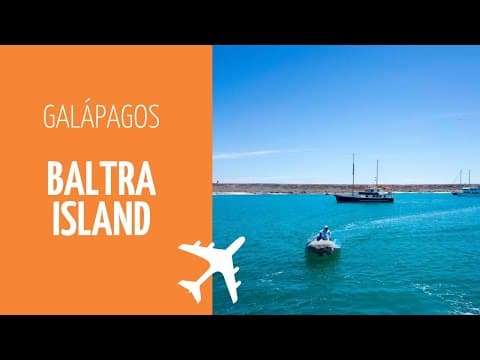
The Ecuadorian Navy and Air Force still maintain a presence here, and as well as the regular flights, Baltra is also the main fuelling point for tourist boats from Santa Cruz. Baltra Island is the first place most travellers will set foot on Galápagos soil. After leaving the airport you travel by bus to the ships that anchor off Aeolian Bay, or go to the ferry dock for a trip to Santa Cruz. Baltra has a very dry environment, and the vegetation you see is mainly salt bush, prickly pear cactus and Palo Santo trees. However lots of birds call Baltra home, including boobies and frigatebirds.
Interesting facts about Baltra
The first place most people set foot on Galápagos soil
A former US airbase, it even used to have a bowling alley!
Baltra is formed from weathered lava uplifts
Many birds live here, including boobies and frigatebirds
Pictures of Baltra
%3Aformat(webp)%2Fgal%2Fdestination%2Fbaltra-1_1.jpg&w=1920&q=75)
%3Aformat(webp)%2Fgal%2Fdestination%2Fbaltra-2.jpg&w=1920&q=75)
Our highlights in Baltra
%3Aformat(webp)%2Fgal%2Fhighlight%2F20170221_Day_1_Arrive_at_Baltra_Airport_Las_Bachas_Santa_Cruz_Island_27_of_473.jpg&w=1920&q=75)
%3Aformat(webp)%2Fgal%2Fhighlight%2Fmosquera_islet_diving.jpg&w=1920&q=75)
%3Aformat(webp)%2Fgal%2Fhighlight%2Fdaphne-major.jpg&w=1920&q=75)
%3Aformat(webp)%2Fgal%2Fhighlight%2Fdaphne-minor.jpg&w=1920&q=75)
%3Aformat(webp)%2Fgal%2Fanimal%2Fblue-footed-boobie.jpg&w=1920&q=75)
%3Aformat(webp)%2Fgal%2Fanimal%2FBrown_Pelican_181_of_240__1.jpg&w=1920&q=75)
%3Aformat(webp)%2Fgal%2Fanimal%2Fgalapagos-finches-3.jpg&w=1920&q=75)
%3Aformat(webp)%2Fgal%2Fanimal%2FDove_227_of_240_.jpg&w=1920&q=75)
%3Aformat(webp)%2Fgal%2Fanimal%2Ffrigate-bird-2.jpg&w=1920&q=75)
%3Aformat(webp)%2Fgal%2Fanimal%2FSky_76_of_82_.jpg&w=1920&q=75)
%3Aformat(webp)%2Fgal%2Fanimal%2F20150524_2850_A_giant_Iguana_on_the_Galapagos_Islands_Ecuador.jpg&w=1920&q=75)
%3Aformat(webp)%2Fgal%2Fanimal%2Flava_gull_4.jpg&w=1920&q=75)
%3Aformat(webp)%2Fgal%2Fanimal%2FLava_Lizard_192_of_240_.jpg&w=1920&q=75)
%3Aformat(webp)%2Fgal%2Fanimal%2F20170225_Day_5_Fernandina_Punta_Espinosa_Isabela_Urbina_Bay_280_of_473.jpg&w=1920&q=75)
%3Aformat(webp)%2F81940802-faec-488d-8840-a911b88ed081-logo_galapagos-white.png&w=1920&q=75)
%3Aformat(webp)%2Fgal%2Fanimal%2FPenguin_5_of_240__1.jpg&w=1920&q=75)