Galapatours logo 1200px svg

Bestseller

All Dates & Prices

Cruises

Galapagos

Info

Home

Bestseller

Galapatours

Santiago, Isabela & Fernandina

Galapatours

South & Central Islands Galapagos Cruise

Galapatours

Santiago, Isabela & Fernandina

Galapatours

Southern, Central, North & Western

Galapatours

Western Galápagos Cruise

Galapatours

Center & Southeast Galápagos

All Dates & Prices

Cruises

Information

Diving Cruises

For Deal Hunters

For Families

For Solo Travelers

Gay & LGBT Cruises

Last Minute Offers

Our Selection Of The Best Routes

Search by Date & Price

Ship Type

All ships & How to pick the best

Larger Ships (>50 Passengers)

Motor Catamarans

Sailing Catamarans

Sailing Yachts

Yachts

Travel Style

Budget Cruises

Classic Cruises

Premium Cruises

Luxury Cruises

Galapagos

Islands: Center

Baltra

Bartholmew

Genovesa

Marchena

North Seymour

Pinzón

Rábida

Santa Cruz

Santa Fe

Santiago

South Plaza

Islands: East

Española

Floreana

San Cristóbal

Islands: West

Darwin (For Divers Only)

Fernandina

Isabela

Wolf (For Divers Only)

Info

Information

All Islands and Highlights

What our travelers say

Our Team & Our Passion

Add-Ons

Answers to over 80 FAQ

Flights

Free Guidebook Download

Galapagos Wildlife Guide

Sustainable Tourism

Weather in the Galapagos

YouTube: Galapagos Expert Talks

Your Advantages When Booking With Us

Why book with us?

Flexible Booking Conditions

No Hidden Fees

Travel Insurance for EU and CH Residents

Unbiased Recommendations

Your money is protected

Contact us

Weekdays from 9:00 to 14:00 EST

$
​
​
$
​
​

Sign up for our Galapagos newsletter

Get travel inspiration and exclusive deals delivered straight to your inbox.

​
Galapatours logo 1200px svg

Budget Ships

Aida Maria

Angelito

Aqua

Danubio Azul

Golondrina

Nemo I

Classic Ships

Aggressor III

Anali

Archipel I

Beagle

Bonita

Eden

Estrella del Mar

Premium Ships

Anahi

Angel

Beluga

Cachalote Explorer

Calipso

Coral I + II

Eco Galaxy

Luxury Ships

Alia

Aqua Mare

Cormorant II

Elite

Endeavour II

Endemic

Evolution

Further Cruise Links

The Best Galapagos Cruises

Galápagos Honeymoon Cruises

Galápagos Cruises with French Speaking Guides

Galápagos Cruises with German Speaking Guides

4 Day Galápagos Cruises

5 Day Galápagos Cruises

7 Day Galápagos Cruises

Further Information

About Galapatours

B2B Deals

Careers

Join our team!

Terms & Conditions

ventura TRAVEL

Reservations

🇺🇸 +1 347 674 0913

🇬🇧 +44 20 4525 9654

🇩🇪 +49 30 30809199

🇫🇷 +33 1 86 26 29 65

Contact Form

service(at)galapatours.com

Weekdays from 9:00 to 14:00 EST

Galapagos Barn Owl

Galapagos Barn Owl

An endangered, endemic species

What you need to know about the Galapagos Barn Owl

The second species of owl in Galápagos is the Barn Owl. This renowned bird is larger than the Short-Eared Owl and is clearly recognised by its distinctive heart-shaped facial disc. This amazing piece of evolution allows sound waves to be focused and channelled towards the owl ears, giving it remarkable hearing.

This majestic owl is almost exclusively active at night. They rely on their hearing “super sense” to locate and capture their prey in the darkness. The Barn Owl diet is mainly rats, mice, small birds and larger insects.

Barn Owls can be seen nesting in holes, lava tubes and other volcanic formations throughout the year. Suitable nesting sites are found in the arid and transitional zones of the islands. Barn owls mate for life, and on average the owls lay a clutch of three eggs which they then incubate for around 30 days.

Numbers of these elegant birds are currently unknown, but due to habitat loss and invasive species such as cats and goats these owls are under pressure. To help with conservation, the Barn Owls are being monitored by scientists on all the major islands including Santa Cruz, San Cristobal, Isabela and Floreana.

Your Galapatours naturalist guide will help you to spot Barn Owls when they are active in the evenings. Our Galápagos cruises have a wide range of itineraries, and if you would like the best chance to encounter Barn Owls then contact one of our Galápagos travel advisers today. They will be able to recommend the best itineraries for you.

Interesting facts about Galapagos Barn Owl

Their scientific name 'Alba' refers to the birds off-white feather color

These owls are widely distributed, but their numbers are not great

Only ever seen at night, when they hunt using their exceptional hearing

Currently being monitored closely by the National Park as their population is under threat

Pictures of Galapagos Barn Owl

Galapagos Barn Owl
Galapagos Barn Owl
+1
Galapagos Barn Owl

Highlights where the Galapagos Barn Owl can be seen

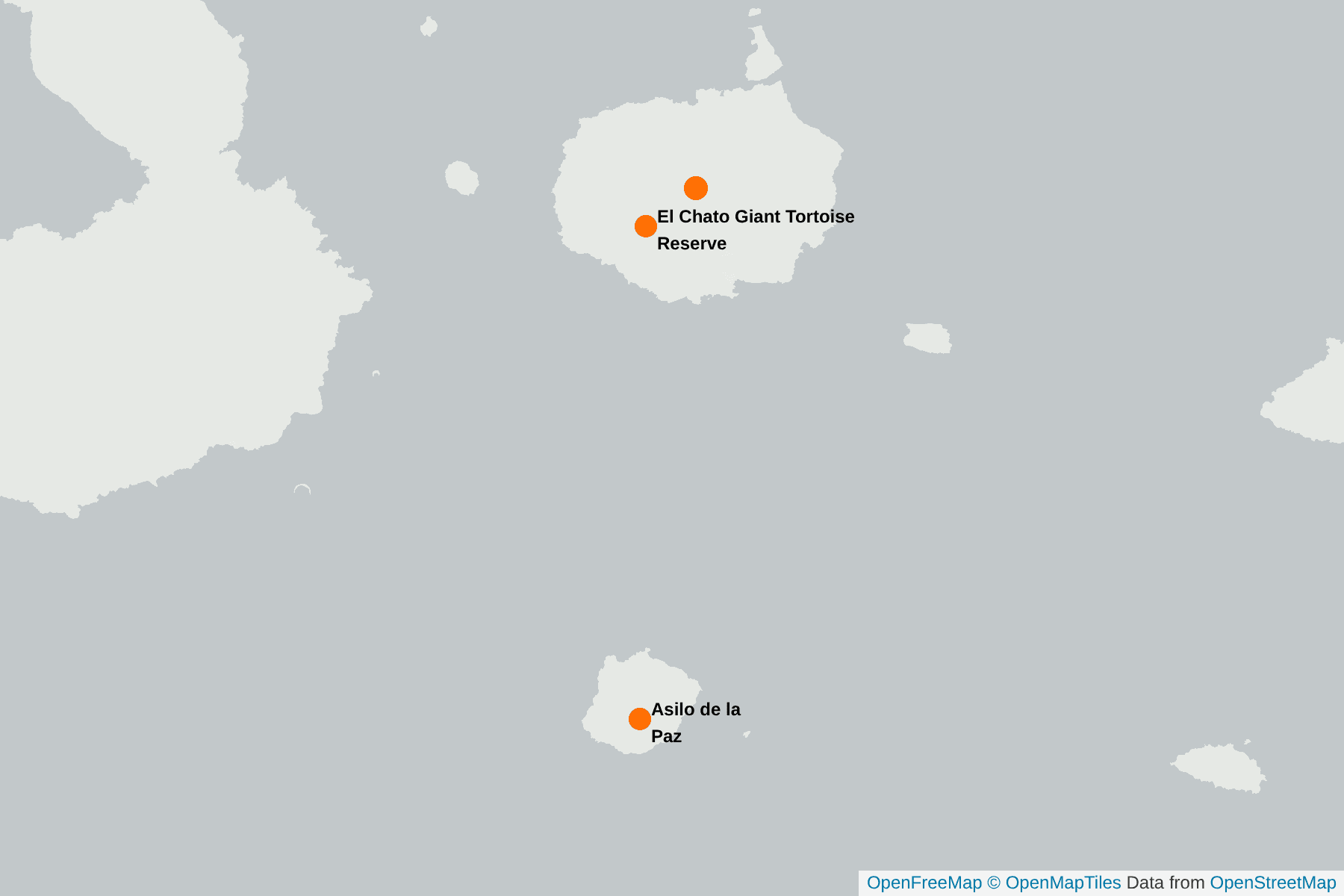
Asilo de la Paz
Asilo de la Paz

Asilo de la Paz on Floreana is a historically important site for the Galápagos. It marks the place where some of the first settlers on the archipelago stayed, and you can visit these caves as well as the rare freshwater spring that made life possible for humans here.

The visitor center is located a short transfer from Puerto Velasco Ibarra on the western coast of Floreana. From the visitor center you can hike up to the top of a 1,470ft hill, walking through magnificent Scalesia forest and passing by a breeding centre where San Cristobal Giant Tortoises are kept - the native Floreana Galápagos tortoises are long extinct, hunted by humans for their meat.

The hiking trail up the hill is hard going in places, and our Galapatours guides really recommend good hiking footwear for this excursion - avoid open-toed shoes.

El Chato Giant Tortoise Reserve

The inland areas of Santa Cruz provide fantastic opportunities to get close to wild Galápagos giant tortoises. These wonderful creatures can be seen roaming around in the agricultural fields, and also in the famous El Chato Tortoise Reserve, where the native vegetation is preserved.

The trail to the Reserve begins at Santa Rosa, about an hour's drive from Puerto Ayora, and during the dry season this is a haven for Giant Tortoises as they migrate from coastal to highland areas, and you can observe the natural behaviours of these truly wild animals.

There is a pond at El Chato that is often surrounded by tortoises, and sometimes even filled with them as they enjoy wallowing in the cool water. Surrounding the ponds are hundreds of acres of natural highland pasture and native Scalesia forest where you may encounter owls, Darwin’s finches, Vermilion Flycatchers, and Galápagos Rails.

For many Galapatours guests the highlight of their trip is following our expert guide into the ancient forest and then hearing heavy footsteps and crunching noises ahead, finally rounding a corner to see a truly wild Galápagos Giant tortoise doing what they have done for millennia before humans came to Galápagos.

El Chato Giant Tortoise Reserve
Santa Cruz Highlands

Santa Cruz is the only island on the Galápagos that allows you to travel through every habitat type that exists in the archipelago. This makes the journey north from the coast up into the highlands a fantastic opportunity to experience the breadth of life that exists on these islands.

Your bus journey starts from Puerto Ayora on the coast and you slowly start to climb through the agricultural zone where open fields begin to give way to lush, green, mist-covered forests. This is a marked contrast to many of the islands which are at much lower elevation and much more arid. This rich verdant landscape is predominantly made up of dense Scalesia forest.

Your expert Galapatours guide will stop several times along the route to allow you to explore various different sites. Among the stops will be a Giant Tortoise reserve, and also a visit to the famous lava tubes. Over half a mile long, a walk through these natural volcanic features is eerie and unforgettable.

Also along the way you will stop for refreshments, and you'll be able to try locally-grown Galápagos coffee - we think it's among the best we've ever tasted!

Twin Craters
Twin Craters

Los Gemelos (or the Twin Craters) are not, in fact, craters - although no less impressive for it! These two large pits were actually caused by the collapse of empty magma chambers after a volcanic uprising. They are easy to access from the Puerto Ayora to Baltra road.

There is a lovely walking trail here that leads up to and then around the rim of both craters. The hike takes you through the wonderful Scalesia Forest, which is full of bird life. It's likely you will see Galápagos Doves, Darwin's Finches, the stunning Vermilion Flycatcher, as well as short-eared owls and many other species.

As you climb up to the rim of the craters you are rewarded with a breathtaking view over the Scalesia canopy, it's lush green a real contrast to the arid vegetation on much of the other Galápagos Islands you can visit.

Our trips to spot the Galapagos Barn Owl

Hitomi

Your contact

Hitomi

Call now

+1 347-674-0913

Weekdays from 9:00 to 14:00 EST

​
​
​
​
​
​
Hitomi